


































































Volunteer with Horses

 Animal
 Wildlife Conservation
 Activities
 Horse Conservation
Horse Trekking
Horse Conservation
Horse Trekking
 Americas
Natural Horsemanship
Americas
Natural Horsemanship
 Africa
 North America
 Canada
 Horse Sanctuary
 Elephant Conservation
 Animal Shelter
 Southern Africa
 Europe
 Southern Europe
 Street Animals
 Hotspots
 Zimbabwe
 Eastern Africa
 Spain
Spain
 Vegan
Vegan
 Scouts
 Anti Poaching
 South America
 Peru
Peru
 Malaga
 Bush Elephant
 Black Rhino
 African Elephant
Rhino Conservation
African Elephant
Rhino Conservation
 Namibia
 Dog
Dog
 Cats
Cats
 Central America
 Costa Rica
 South Africa
 Spanish Courses
 Language Course
 Families with small kids
 Yoga
Yoga
 Premium
 Asia
Asia
 Mongolia
 Eastern Asia
 Italy
Italy
 Greece
 Crete
Crete
 African Wild Dog Conservation
 Southwest African Lion
 Lion Conservation
East African Wild Dog
Lion Conservation
East African Wild Dog
 Marine Life
 Olive Ridley Turtle
 Sea Turtle Conservation
 Tenerife
 Bird Conservation
 Reforestation
 Portugal
 Eurasian Otter
 Otter Conservation
 Eagle
Eagle
 Bear Conservation
 Wolf Conservation
Brown Bear
Wolf Conservation
Brown Bear
 Grey Wolf
 Horse Therapy
 Animal Sanctuary
 Social Work
 Community
 Split
Split
 Croatia
 Southern Asia
 Jaipur
 India
Cordoba
India
Cordoba
 Argentina
 Sloth Sanctuary
 Mexico
 Oaxaca
 Intern Abroad
 Veterinary Training
 Voluntourism
 Cuba
Cuba
 Caribbean
 Volunteer and Travel
 National Park
Three-toed Sloth
National Park
Three-toed Sloth
 Anteater Conservation
 Macaw
Southern Tamandua
Two-toed Sloth
Macaw
Southern Tamandua
Two-toed Sloth
 Chile
Chile
 Agriculture
 Environment
 United States Of America
 Florida
 Guyana
 Uruguay
 Guatemala
 Antigua
 Cusco
Teaching German Abroad
Cusco
Teaching German Abroad
 Porto
Teaching Internship
Porto
Teaching Internship
 Iceland
 Reykjavik
 Lake Titicaca
 English Teaching
 Education
 Northern Europe
 British Columbia
 Queensland
 Australia and New Zealand
 Australia
 Oceania
 Puerto Viejo













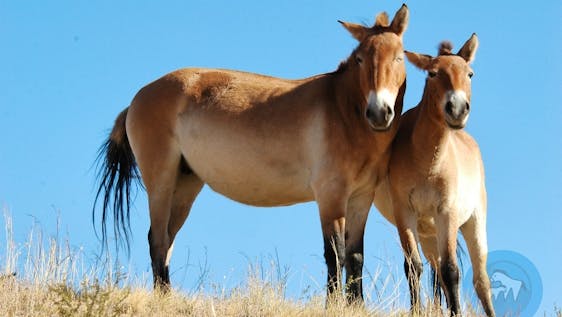
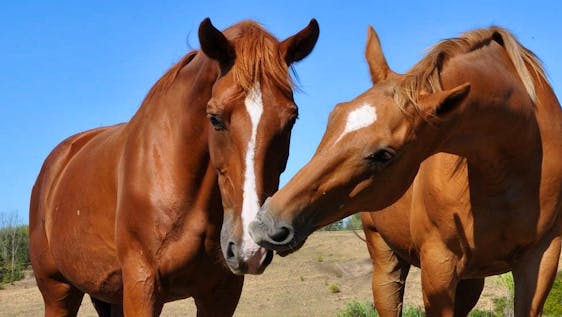






Horse Rescue Programs
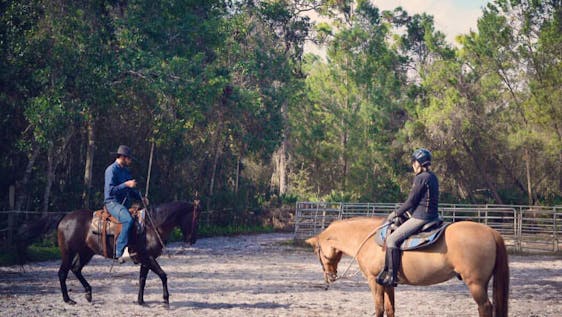
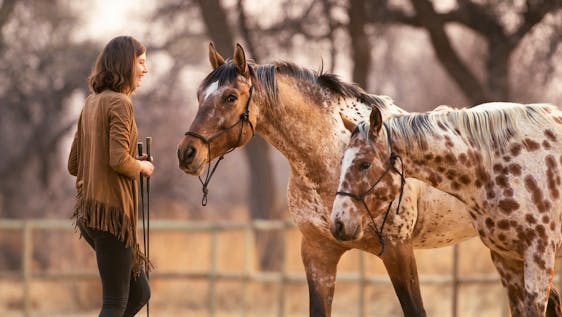
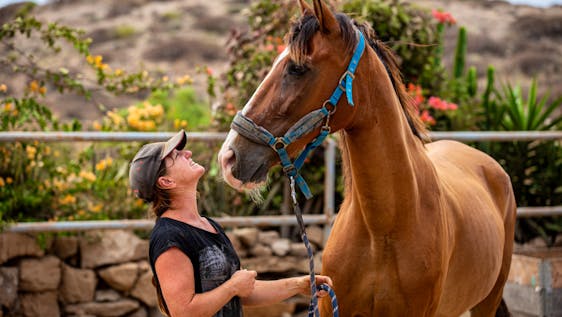
The warm snort on your neck, bright eyes over the fence, dust dancing in the evening light: Volunteering with horses means care, re-socialization, equine-assisted therapy, ranch routines and—where responsible—guided rides in reserves. Ethical, effective, meaningful. Whether a horse sanctuary in Spain, Equine Assisted Therapy in Costa Rica, ranch skills in Canada or guided horseback safaris in South Africa, you’ll find the right hub here.
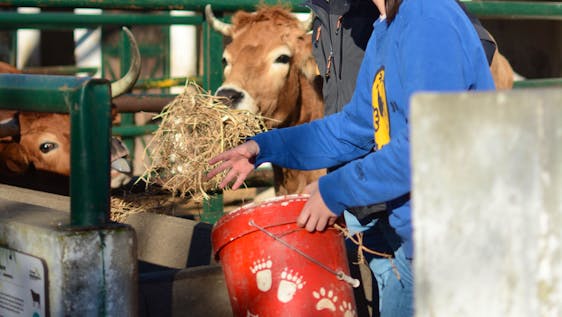
Working with horses helps the animals and you: many volunteers report more balance, focus and resilience. The daily rhythm—feeding, care, groundwork, training with positive reinforcement—builds trust and structure. Riding is optional and level-dependent; the core priorities are welfare, safety and teamwork.
🇺🇸 Quick facts for US volunteers
- STEP enrollment: Register your trip with the US Smart Traveler Enrollment Program so local embassies can reach you in emergencies.
- Insurance: Travel medical with evacuation & repatriation is strongly recommended; many projects require proof.
- Background & First Aid: Therapy/youth-adjacent roles may request a background check and basic CPR/First Aid.
- Power & adapters: Most destinations use 220–240V; bring a universal adapter (Types C/F/G) and dual-voltage gear.
- Units: Metric on site; we can translate to lbs/inches if helpful.
⚡ TL;DR – Horse volunteering at a glance
- Ethics first: force-free training, no coercion, clear welfare standards, safety briefings.
- Role mix: care & feeding, stall/pasture upkeep, groundwork, equine-therapy support, ranch/trail management; guided rides only if level-appropriate and program-dependent.
- Length & budget: 2–3 weeks (impact sprints) or 4–8 weeks (method depth); typically €200–€1,000 / week.
- Top destinations: Spain, South Africa, Canada, Costa Rica, Peru, Mongolia.
- Long-stay value: therapy routines, feeding plans, training protocols, herd management, seasonal ops (hay, fences, water).
🌎 Where can I volunteer with horses abroad?
Popular countries include Spain, South Africa, Canada, Costa Rica and Peru—and Mongolia offers unique culture and horse traditions. Many programs are on ranches or in sanctuaries close to nature—fresh air, clear routines, lots of horse time.



















Wherever you go, you’ll find horse projects worldwide. You’ll get to know “your” horses—and the local nature & culture too.
🏇 Working with horses – typical volunteer tasks
What might a day at a rescue or ranch look like? Common activities:
- Preparing & distributing feed, water management
- Stall/pasture care, repairs, tack/gear maintenance
- Grooming and health observations (logs/records)
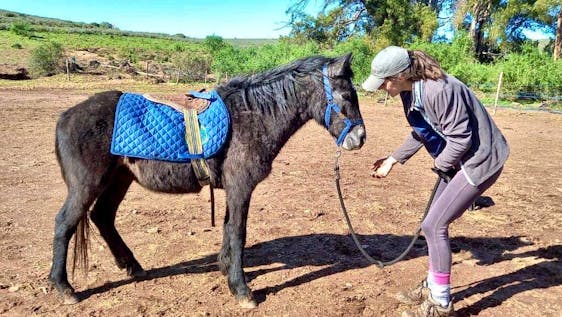
- Groundwork & training with positive reinforcement (no force)
- Supporting gentle acclimation of new arrivals
Riding is not mandatory and often limited to level-appropriate sessions. Read project descriptions carefully and choose a program that matches your expectations.
Typical tasks in Equine-Assisted Therapy
- Session prep, safety, materials logistics
- Care and calm groundwork with therapy horses
- Assisting qualified therapists (volunteers do not lead therapy)
- Documenting simple observations
What do volunteers do in a horse rescue/sanctuary?
- Feeding & watering, hay/pasture management
- Stall cleaning, repairs, fence/water-point checks
- Grooming, hoof-care assistance, vet assistance (as instructed)
- Gentle training & habituation, enrichment & stimulation
Which breeds might I work with?
Depends on location: hardy crossbreeds (safari/reserves), Paso Peruano (Peru), warmbloods/Arabians/Camargue (Europe) or nomadic horses (Mongolia). Many sanctuaries also care for donkeys; reserves may include zebras; some Andean projects work alongside llamas.
Who can volunteer on a horse project?
Projects prefer volunteers staying several weeks (continuity for the animals). Some programs require animal experience; many welcome motivated beginners with team spirit & basic fitness. A horse-focused gap year enables wider responsibility.
Studying veterinary medicine? Rescues provide great exposure (assistance only as instructed). Interested in psychology/education? Equine-therapy programs are ideal for support roles.
❓ Volunteer requirements
- Love for horses, reliability, and teamwork
- Comfort with physical work & “getting your hands dirty”
- Baseline fitness; follow safety rules strictly
- Functional English; cultural openness
- Flexibility with schedules & weather
US note: Some therapy/youth placements may require a recent background check and basic CPR/First Aid certification.
🧭 Decision Playbook – find your best-fit project in 90 seconds
- Your goal?
- Sanctuary & re-socialization → Spain, Portugal, France
- Equine-Assisted Therapy (EAT/EAA) → Costa Rica, Spain
- Ranch skills & horsemanship → Canada, Argentina, Peru
- Wildlife reserve & guided patrols → South Africa
- Culture & wide open spaces → Mongolia
- Riding level: see rubric below—pick level-appropriate projects.
- Time: 2–3 weeks = learn routines · 4–8 weeks = continuity for training/therapy and ranch cycles.
- Season & climate: Mediterranean (spring/fall), safari dry seasons, tropical wet/dry cycles.
Tip: Split placement: 2 wks Spain Sanctuary + 2 wks South Africa Reserve.
🏇 Riding-level rubric – honest self-assessment
| Level | Indicators | Suggested hubs |
|---|---|---|
| A (Beginner) | Basic handling, little saddle time | Sanctuaries: Spain, Portugal, therapy-assistant tracks |
| B (Novice) | Walk/trot, basic seat, guided hacks | Spain coast/islands, France Camargue, Costa Rica Ranch |
| C (Intermediate) | Confident in three gaits, trail-safe | South Africa reserves, Peru (Paso) |
| D (Advanced) | Open terrain, pace changes | Guided patrols South Africa, nomad treks Mongolia |
Many projects don’t require riding: groundwork, care, training & therapy support are standalone tracks.
🌍 Hubs & locations – what fits you?
🇪🇸 Spain – Equine sanctuaries & positive reinforcement
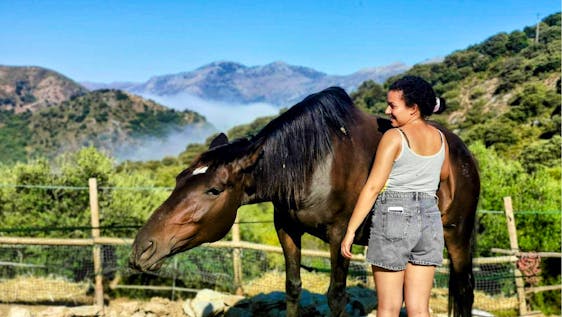
Focus: force-free training, rehab of rescued horses/donkeys, routine care, groundwork, visitor education. Coastal/island climate, good logistics, great for beginners & 50+.
Sample week (Sanctuary)
- Mon: Onboarding (welfare policy, feed plan), stall/pasture checks
- Tue: Feeding & meds per plan, grooming, hay management
- Wed: Positive-reinforcement training (groundwork), logs & photo-ID
- Thu: Hoof/tack check (assist), fences/water points
- Fri: Enrichment (ground-trail, mental stimulation), weekly report
- Sat/Sun: off-shift / light ranch tasks / local markets
More: Horse sanctuaries
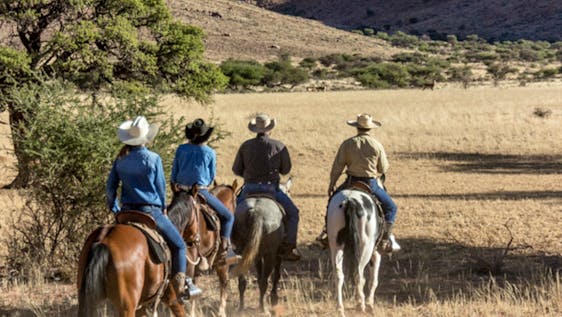
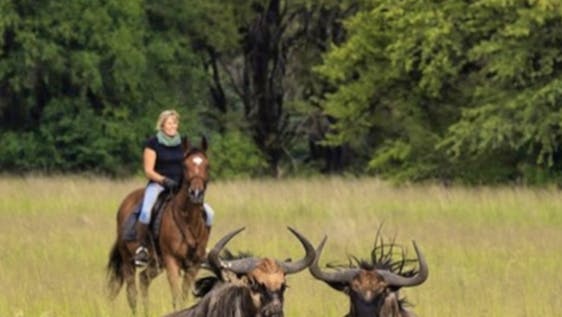
🇿🇦 South Africa – Guided horseback safaris, monitoring & anti-poaching support
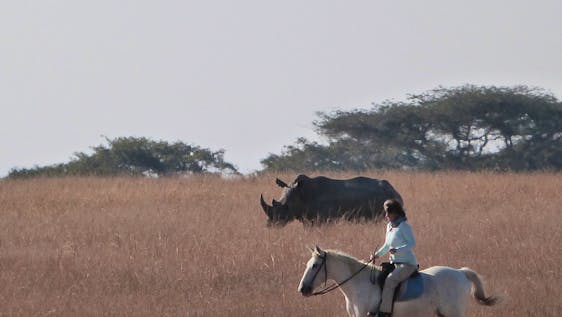
Focus: reserve routines, guided rides (C/D levels), game counts, fence/trail maintenance, preventive ranger patrols on safe routes (helmet/safety required; no apex predators in patrol area).
Sample week (Reserve)
- Mon: Safety briefing (ranger), horse fit check, paddock tour
- Tue: Early patrol (guided), water-point log, pasture rotation
- Wed: Game count (mounted/on foot), data upload
- Thu: Fence-line check, enrichment, farrier/vet assist (if scheduled)
- Fri: Trail maintenance, weekly report to ranger lead
More: Wildlife in Africa · Big Five projects.
🇨🇦 Canada – Ranch skills & horsemanship
Focus: ranch routines (BC/Alberta), feeding, pasture management, tack care, guided rides (level-dependent), seasonal ops (hay, fences, water).
🇨🇷 Costa Rica – Equine therapy & natural horsemanship
Focus: Equine Assisted Therapy (EAT/EAA), positive reinforcement, session prep, horse care, ranch routines; often no-cost therapy slots for local families—volunteers assist, do not lead.
More: Equine therapy
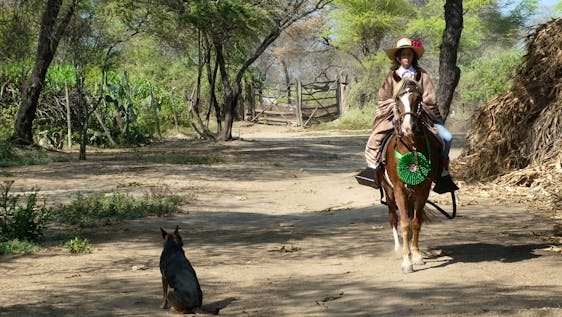
🇵🇪 Peru – Paso Peruano & Andean ranch
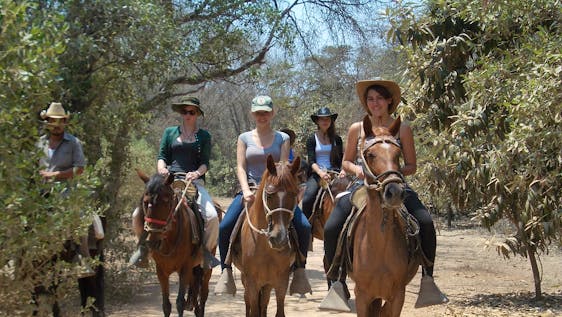
Focus: caring/training Paso horses, ranch management, guided cultural rides, welfare in semi-arid landscapes. Great for intermediate+ (gait, stamina).
🇲🇳 Mongolia – Nomads, vast steppe & horse tradition
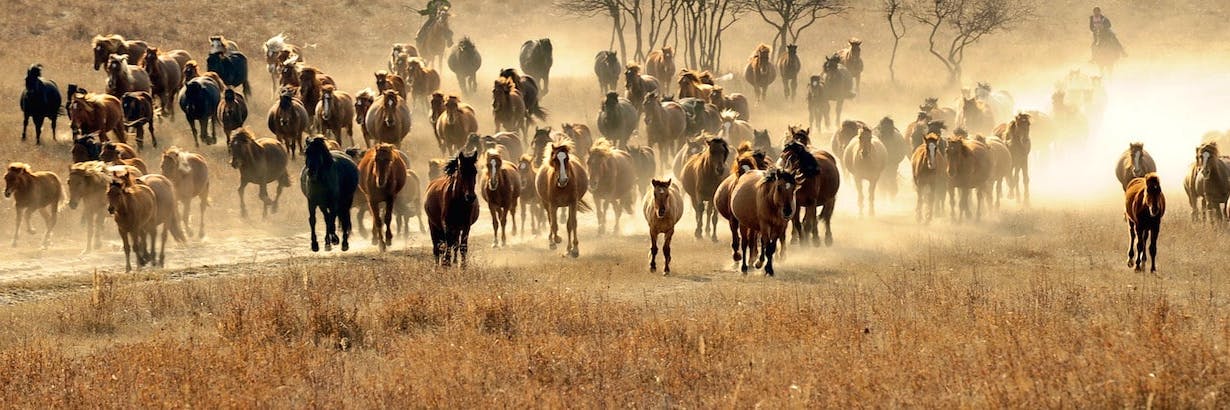
Focus: life with nomad families (gers), herd routines, basic care, simple ranch/camp tasks, cultural exchange. Riding level varies by project; respect for tradition is central.
📍 Location matrix – strengths, fit & outputs
Match your goals, riding level and realistic weekly outputs:
| Hub | Strength | Good for | Riding level | Typical weekly outputs |
|---|---|---|---|---|
| Spain | Sanctuary, re-socialization, education | Beginners, 50+, families | A–C | 10–18 care blocks, 30–60 groomings, 5–10 enrichment sessions |
| South Africa | Reserve, guided patrols, game counts | Intermediate–Advanced | C–D | 2–4 patrols, 1–2 game counts, 2 trail-maintenance sessions |
| Canada | Ranch cycles, horsemanship | Long stays, skills growth | B–D | Feeding/pasture routines, 3–6 guided rides, tack care |
| Costa Rica | Therapy assist, natural horsemanship | Social/education focus | A–C | 2–4 therapy sessions (assist), 20–40 care steps, logs/QA |
| Peru | Paso training, culture trails | Intermediate, language & culture | C–D | 3–5 guided rides, 10–20 training units, ranch ops |
| Mongolia | Nomad life, adaptability | Adventure, cultural immersion | B–D | Herd assist, day rides (variable), camp/supplies tasks |
🧰 Methods, training & welfare policy
Why it matters: clean routines, animal-friendly training and disciplined data are the backbone of sustainable horse work.
What you’ll learn
- Care & feeding: rations, pasture management, water-point hygiene, meds per plan
- Training (positive): groundwork, targeting, desensitization—no force
- Therapy support: preparation, safety, documentation (volunteers don’t lead therapy)
- Ranch ops: fences, tack, hay logistics; trail maintenance
- Data & QA: health logs, feed plans, training protocols
Non-negotiable welfare standards
- No violence, no coercion; force-free training
- Level-appropriate riding; heat/weather management
- Vet-led treatments; assistance only as instructed
- Transparent SOPs, emergency protocols, insurance requirements
🌦️ Season calendar – when to go where
Weather & season shape tasks (hay, pasture, trails) and comfort. Quick guide:
| Region | Best time | Notes |
|---|---|---|
| Spain/Portugal | Mar–Jun, Sep–Nov | Hot/dry in summer; spring/fall ideal for sanctuary & training |
| South Africa | May–Sep (dry) | More stable trails, simpler reserve logistics |
| Canada | May–Sep | Ranch high season; winters suit cold-ready, experienced riders |
| Costa Rica | Dec–Apr (dry) | More predictable therapy schedules; rains need buffers |
| Peru (Andes) | May–Sep | Cool/dry; consider altitude |
| Mongolia | Jun–Sep | Nomad summer camps; early/late can be chilly |
⏳ Duration & 💸 Budget – plan realistically
- 2–3 weeks: learn routines; 1–2 focus tracks (care/training/therapy assist)
- 4–8 weeks: continuity for training/therapy, ranch cycles, process improvements
- Typical cost range: €200–€1,000 / week (varies by country/inclusions)
Value by duration – what you’ll realistically achieve
| Length | Realistic goals | Typical outputs |
|---|---|---|
| 2 weeks | Routines & 1–2 focus tracks | 10–20 care blocks, 10–30 groomings, 2–4 enrichment sessions |
| 3–4 weeks | Training + documentation depth | 20–40 care blocks, 20–60 groomings, 1 mini process improvement |
| 6–8 weeks | Continuity, responsibility packages | 40–80 care blocks, 2–4 weekly reports, 1–2 optimizations |
🛡️ Safety, visas & packing list
Safety: daily briefings, helmet required for riding, weather/heat cut-offs, vet leadership, first aid, no solo trail outings.
Visa overview (quick, non-binding):
| Country | Typical entry | Standard stay | Notes |
|---|---|---|---|
| Spain/Portugal/France/Germany (Schengen) | Visa-free for many passports | Up to 90/180 | US note: US citizens generally visa-free for short tourism stays; check 90/180 rule & passport validity. |
| South Africa | Visa-free or visa depending on passport | 30–90 days | US note: US citizens typically visa-free for short visits; onward/return ticket recommended. |
| Canada | eTA/visa depending on passport | Up to 6 months | US note: US citizens don’t need eTA for land/sea; check air-travel rules. Bring passport book. |
| Costa Rica | Visa-free/visa depending on passport | Up to 90 days | US note: Onward/return ticket & sufficient funds may be checked. |
| Peru | Visa-free/visa depending on passport | Up to 90 days | US note: US citizens are typically visa-free for tourism; verify current entry rules. |
| Mongolia | Visa/eVisa depending on passport | 30–90 days | US note: Entry rules change periodically; eVisa options may be available. |
US note: Treat visa info as planning guidance, not legal advice—always verify with official sources before booking.
Packing list: riding helmet (if not provided), gloves, boots, technical layers, rain shell, sun protection, water bottle/filter, headlamp, travel meds kit, optional breeches.
US note: TSA allows helmets/boots in carry-on but expect extra screening; pack prescriptions in original boxes with copies of scripts.
🤝 Who is it for?
👩💻 Working professionals (2–3 weeks)
Clear routines, visible contribution, mental reset—ideal as a purpose-driven break.
🧭 50+
Sanctuary & therapy tracks offer meaningful, predictable tasks without performance pressure.
👨👩👧 Families & U18
Selected hubs with family-friendly tasks (grooming, feed prep, education).
🎓 Students/internships (4–8 weeks)
Animal health, training documentation, pedagogy—certificates/references possible.
US note: Ask your advisor about service hours, independent study credit or pre-vet requirements; we provide supervisor letters and logbooks.
🗺️ Routing & sample itineraries
- 4 weeks Sanctuary + Reserve: 2 wks Spain → 2 wks South Africa
- 4 weeks Therapy + Ranch: 2 wks Costa Rica → 2 wks Canada
- 6–8 weeks Deep Dive: 3–4 wks Peru (Paso) → 3–4 wks Mongolia
US note: Sample routings from US hubs: NYC/BOS → MAD/BCN (Spain); LAX → SJO (Costa Rica) → YVR (Canada); MIA → LIM (Peru) → JNB (South Africa).
Benefits of volunteering with horses
Learn new things
From feeding to training protocols: deepen your understanding of husbandry, healing & positive reinforcement—and learn about yourself.
Meet people
Teamwork bonds people: you’ll meet like-minded volunteers and often form long-term friendships.
Explore countries
Whether South Africa, Spain or Peru: experience nature & culture in depth—responsibly and away from mass tourism.
Life experience
Perspective shift guaranteed: meaningful work reduces everyday stress—many report more clarity & calm.
Health
Regular volunteering often correlates with better well-being—structure, movement and social bonds help.
How to apply for your horse project
- Check project requirements for roles, riding level and season.
- Pick location & dates—compare inclusions & budget.
- Submit your application. Coordinators will confirm details & answer questions.
US note: Consider travel medical insurance with evacuation; consult a travel clinic for destination vaccines and ask about a rabies pre-exposure series for animal-contact tracks.
💡 Funding ideas for US volunteers
- Employer programs: Matching gifts or volunteer grants—check HR/benefits.
- Campus grants & service-learning: Travel/service funds in exchange for a reflection or short presentation.
- 501(c)(3) pathways: If donations can route via a US fiscal sponsor, tax-deductibility may apply. No tax advice—verify formally.
- Community fundraising: Alumni networks, Rotary/Rotaract, local foundations, faith-based grants.
🎓 College credit, pre-vet hours & documentation
- Learning agreements: We can sign learning/training objectives with hours and outcomes.
- Supervisor letters: End-of-stay reference letter detailing roles, scope and dates.
- Structured logbooks: Care/training/therapy-assist logs suitable for pre-vet, pre-PT or education programs.
🩺 Health & safety details for US travelers
- Travel clinic lead time: Plan 4–8 weeks for vaccines; discuss rabies pre-exposure for animal work.
- Evac activation: Know your insurer’s hotline and pre-authorization flow.
- Meds & TSA: Keep prescriptions in original packaging with a copy of your script in carry-on.
- Consent & privacy: Photo/filming in therapy settings requires prior consent; we brief you on image releases.
📱 Money & connectivity tips
- Cards & fees: Carry two cards; check foreign transaction fees and ATM limits; notify banks of travel.
- eSIM/local SIM: Data eSIM saves costs; download offline maps—rural Wi-Fi can be patchy.
- Emergency info: Store ICE contacts, project address, embassy number and insurance hotline on phone and on paper.
🌍 Culture & expectations
- Communication style: US directness vs. local indirectness—country brief provided pre-departure.
- Feedback cadence: Weekly check-ins with clear micro-goals rather than daily performance reviews.
- Tipping norms: Location-specific guidance for guides, transfers and housekeeping.
🛡️ Liability, consent & role boundaries
- Waivers: Standard liability waivers and emergency protocols covered on Day 1.
- Scope: Volunteers do not lead therapy or medical treatments; vet/therapy leads instruct.
- Incident reporting: Clear chain—who to notify, timelines, forms. Trained during onboarding.
🗺️ Sample routings from US hubs
- 2–3 wks Spain (Sanctuary): NYC/BOS → MAD/BCN (overnight), rail/bus to project, Sunday return possible.
- 4 wks Costa Rica + Canada: LAX → SJO (2 wks EAT) → YVR (2 wks Ranch)—good season combo.
- 6–8 wks Peru + South Africa: MIA → LIM (3–4 wks Paso) → JNB (3–4 wks Reserve); 2–3 buffer days between.
❓ US FAQ (extended)
Can I get a tax benefit?
Only if donations go through a recognized US 501(c)(3) and meet IRS criteria. Please verify formally—we provide receipts on request.
Will hours count for my college/service record?
Yes if your institution approves. We document tasks & hours and issue completion letters.
Do I need a background check?
Required for therapy/child-adjacent roles (e.g., FBI check). We accept recent checks (usually ≤12 months) and can refer US providers.
Can I carry my helmet on board?
Usually yes; expect extra screening. Pack it cushioned (liner up) in a soft bag.
How should I handle prescription meds?
Original boxes + English script summary; keep essentials in carry-on and confirm the destination’s import rules.
Are tips expected?
Varies by country. We provide a pre-trip guide with local norms so you can tip fairly.
US notice: Visa, insurance and tax information are for orientation only and are not legal, tax or medical advice. Always confirm with official sources and your insurers before booking.
🧠 Myths vs. facts
- Myth: “The more riding, the better.” — Fact: welfare & appropriate tasks come before saddle hours.
- Myth: “No riding experience = no impact.” — Fact: many roles are groundwork-based and trainable.
- Myth: “Short stays don’t matter.” — Fact: routines, enrichment and documentation add immediate value.
📈 Impact & metrics
How we show impact: weekly outputs + brief reports (care, training, documentation, small process improvements).
- Care blocks & groomings (quality over quantity)
- Enrichment implementations (e.g., new ground-trail)
- Therapy-assist slots (prep, safety)
- Ranch/reserve maintenance (fences, trails, water points)
❓ Frequently asked questions – horse volunteering (SEO)
Horse volunteering abroad: what exactly will I do?
Care, feeding, stall/pasture work, groundwork/positive-reinforcement training, therapy assistance, ranch/trail management and—depending on level—guided rides.
Best countries: Spain, South Africa, Canada, Costa Rica, Peru or Mongolia?
Spain/Portugal for sanctuaries (beginner-friendly), South Africa for reserve context, Canada for ranch skills, Costa Rica for therapy, Peru for Paso experience, Mongolia for culture & vast landscapes.
Equine-assisted therapy as a volunteer: what’s my role?
Preparation, safety, horse care, materials logistics, documentation—therapy is led by professionals; you assist.
Anti-poaching/reserve riding in South Africa: how safe is it?
Only briefed, guided routes; no apex predators in patrol areas; helmet/safety requirements; clear heat/weather cut-offs.
Weekly cost & what’s included?
Typically €200–€1,000/week; often includes accommodation, sometimes meals, on-project transfers, coordination and a project donation.
Requirements & riding level: do I need riding experience?
Not necessarily. Many tracks are groundwork-based; riding assignments are level-matched. See the riding-level rubric.
Season & weather: when’s best?
Europe: spring/fall; South Africa: dry season; Canada: summer; Costa Rica: dry season; Peru (Andes): austral winter; Mongolia: summer.
Accommodation & meals: what to expect?
Ranch/volunteer houses or simple lodges; often shared rooms. Meals vary (self/partial/full). Vegetarian/vegan options are common.
Travel prep: insurance, visas, vaccinations?
Travel medical insurance with evacuation is recommended/sometimes required; visas vary by passport; consult travel-health guidance per destination; passports typically need 6+ months validity.
US note: Check TSA rules for meds & helmets, and consider an international eSIM or local SIM for data.
“Horse volunteering Spain coast without riding experience” — is that possible?
Yes. Coastal sanctuaries focus on care/re-socialization & education. Riding isn’t required.
“Volunteer ranch Canada beginner” — does it make sense?
Yes, with willingness to learn, teamwork and base fitness. Riding is guided & level-matched; many duties are from the ground.
“Equine therapy Costa Rica with children” — what’s my role?
Assist (prep, safety, horse care, documentation)—you don’t lead sessions. Basic Spanish helps.