




















































































Orangutan Sanctuary Volunteer
 Hotspots
 Monkey Conservation
 Great Apes Conservation
 Animal
 Asia
Asia
 South East Asia
 Primate Conservation
 Indonesia
 Macaque
 Sumatra
Dusky Leaf Monkey
Sumatra
Dusky Leaf Monkey
 National Park
 Waste Reduction
 Plastic Reduction
 Bear Conservation
 Borneo
Sun Bear
Borneo
Sun Bear
 Activities
 Binturong Conservation
Binturong
Asiatic Black Bear
Binturong Conservation
Binturong
Asiatic Black Bear
 Malaysia
 Animal Sanctuary
Proboscis Monkey
Animal Sanctuary
Proboscis Monkey
 Wildlife Conservation
 Vervet Monkey
 Vegan
Vegan
 Civet
Civet Conservation
Civet
Civet Conservation
 Gibbon
 Tiger Conservation
Sumatran Tiger
Siamang
Tiger Conservation
Sumatran Tiger
Siamang
 Wildcat Conservation
 Bat Conservation
Leopard Cat
Bat
Bat Conservation
Leopard Cat
Bat







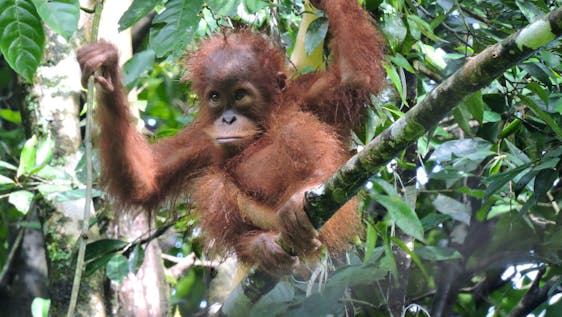
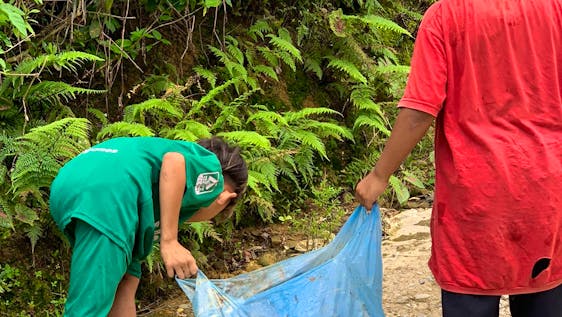


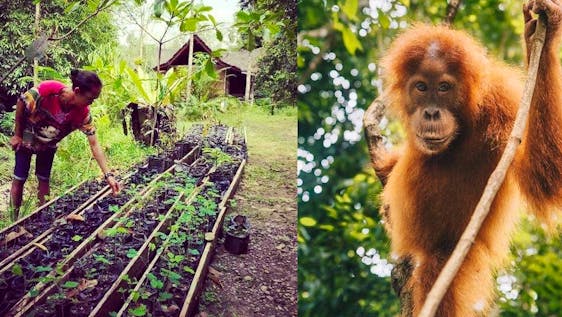



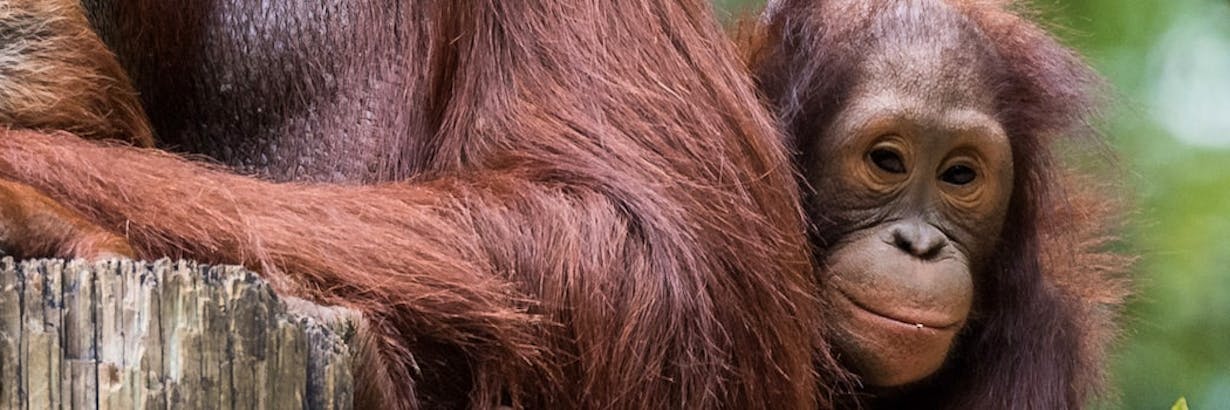
Volunteer with Orangutans in Borneo
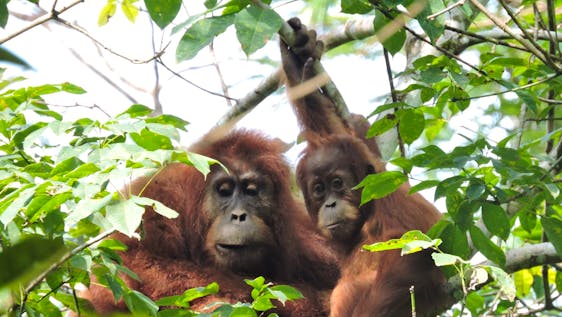
Morning mist hangs between the crowns. Gibbons call, hornbills arrow through the green. You’re on a forest trail in Sumatra, counting orangutan nests — no selfies, no touching, no “feeding”. That’s hands-off conservation: monitoring, reforestation, and community work — technical, effective, ethical. Hubs: Indonesia (Sumatra & Kalimantan) · Malaysia (Sabah & Sarawak).
⚡ TL;DR
- Ethics first: zero contact, strict hands-off policy (PPE, hygiene, quarantine), no selfies or feedings.
- Your contribution: line transects & nest counts, trail cameras, nursery & tree-planting, rehab logistics without contact, data QA, community sessions.
- Duration & budget: 2–3 weeks (impact sprints) or 4–8 weeks (method depth) · typical €425–700 / week (excl. flights/visas). (Indicative; check current pricing in USD/GBP.)
- Quick start by goal: Behaviour research: Sumatra (from ~€495) · Reforestation/release routes: Kalimantan (from ~€475) · Rehab/education: Sabah (from ~€525) / Sarawak (from ~€445).
Why protect orangutans — and why you matter
Orangutans are the forest’s gardeners. They disperse seeds, open light gaps in the canopy, and stabilise rainforest ecosystems. Every cleared hectare shrinks their home — habitat loss, poaching, illegal trade, and extremely slow reproduction compound the decline.
Your work shifts outcomes: one cleanly logged nest transect becomes a dataset that reorders protection priorities. One seedling planted today is a food tree in 20 years. One village session can prevent the next field-edge conflict.
🦧 How threatened — and why?
- Very slow reproduction: females often first reproduce ~16 yrs; young stay up to 8 yrs → low recovery rate.
- Habitat loss & fragmentation: deforestation, plantation conversion, fires.
- Illegal hunting & trade: mothers killed, infants sold; high mortality/trauma.
- Edge conflicts: crop-raiding leads to retaliatory killings.
Before you travel: reduce products with unsustainable palm oil; choose certified alternatives.
How to choose the right programme
- Motivation: Behaviour & nest indices (Sumatra) · Reforestation & release routes (Kalimantan) · Rehab logistics & education (Sabah/Sarawak).
- Season & terrain: dry season = easier logistics; monsoon = muddy/challenging. Be realistic about fitness.
- Role vs time: 2–3 weeks → trail-cam servicing, nursery work, data QA. 4–8 weeks → line transects (set routes), phenology (fruit/flower cycles), GIS, community outreach.
- Ethics check: 0% animal contact, clear biosecurity (PPE, quarantine), documented outputs.
- Hubs/entry: Medan (Sumatra) · Balikpapan/Pangkalan Bun (Kalimantan) · Kota Kinabalu/Sandakan (Sabah) · Kuching (Sarawak).
“Hands-on with orangutans” sounds nice — but it’s not conservation. Serious programmes are strictly hands-off.
🧭 Decision Playbook — pick your hub in 90 seconds
-
Your core goal?
- Observe wild orangutans & understand nest indices → Sumatra
- Reforestation with visible results → Kalimantan
- Rehab processes & education (no contact) → Sabah
- Community programmes & data QA → Sarawak
-
How much time?
- 2–3 weeks → impact sprints (trail-cams, nursery, QA)
- 4–8 weeks → method depth (transects, phenology, GIS, education)
-
Preferred setting?
- Field camp & jungle → Sumatra / Kalimantan
- Centre with structure → Sabah / Sarawak
- Month & season (see calendar below) → check rain/monsoon, trail access.
Undecided? Split placement (e.g., 2 wks Sumatra + 2 wks Sabah) — field methods and rehab insight in one trip.
🌦️ Season & field conditions — when to go where
| Region | Better months | Notes |
|---|---|---|
| Sumatra (Aceh/Leuser) | June–September | Less rain → better visibility & trails; nest transects more predictable. |
| Kalimantan (Central/East) | July–October | Nesting & planting seasons align; heat management important. |
| Sabah (Sepilok/Sandakan) | February–August | Stable rehab workflows; education well-planned; scattered showers normal. |
| Sarawak (Kuching) | March–September | Community & mangrove/forest work with moderate rain risk. |
Read it like this: “Better months” = smoother logistics & higher activity probability. Projects run year-round, but with more weather buffer outside peak months.
🧭 Country Quickfit & hubs



🇮🇩 Sumatra (Aceh / Gunung Leuser)
Focus: Wild behaviour, nest counts, corridor monitoring, community education.
Field feel: Transects under lianas, nest ageing, evening database & QA.
Sample week
| Day | Activity |
|---|---|
| Mon | Onboarding: ethics, biosecurity, nest ID |
| Tue | Line transect (AM), data QA (PM) |
| Wed | Phenology plot (fruit/flower cycles) & tree tagging |
| Thu | Trail-cams: service, metadata, upload |
| Fri | GIS basics & weekly report |
| Sat/Sun | Rest / culture & nature |
“4 weeks in Sumatra: 8 line transects (~180 km), 10 trail-cam services, 1 phenology plot. My ‘click’ moment: how data QA reshapes priorities.” — Anna, 21
📅 Start dates & fees — Sumatra
- Starts: 2× monthly (Mon)
- Duration: 2–8 weeks
- From: €495 / week
- Payment: €250 deposit · balance due 30 days pre-departure
Included: camp (shared), 3 meals/day, in-project transfers, induction & field training, supervision.
Not included: international flights, visa/ETA, vaccinations, travel insurance (incl. medevac), optional weekends.
🇮🇩 Kalimantan (Central & East Borneo)
Focus: Reforestation (nursery & planting), release routes, rehab logistics without contact.
Field feel: Seedling pricking in the morning, digging planting holes at noon, clearing paths in the afternoon — sweaty, tangible impact.
“2 weeks in Kalimantan: 480 seedlings produced/planted, 6 trail-cam checks. I can see the forest that will stand here.” — Lea, 24
📅 Start dates & fees — Kalimantan
- Starts: monthly (Mon)
- Duration: 2–12 weeks
- From: €475 / week
- Payment: €250 deposit · balance due 30 days pre-departure
Included: camp (shared), 3 meals/day, in-project transfers, induction & field training, supervision.
Not included: international flights, visa/ETA, vaccinations, travel insurance (incl. medevac), optional weekends.
More: Indonesia projects · Wildlife in Asia
🇲🇾 Sabah (Sepilok/Sandakan)
Focus: Rehab centres (no animal contact), education, habitat upkeep, trail-cams.
Setting: Structured centre work — PPE on, material routes, documentation, visitor education.
“3 weeks in Sabah, strictly no contact: 14 logistics runs coordinated, 9 trail-cam services, 220 documentation entries. Biosecurity protects lives.” — Max, 27
📅 Start dates & fees — Sabah
- Starts: 2× monthly (Mon)
- Duration: 2–10 weeks
- From: €525 / week
- Payment: €300 deposit · balance due 45 days pre-departure
Included: camp (shared), 3 meals/day, in-project transfers, induction & field training, supervision.
Not included: international flights, visa/ETA, vaccinations, travel insurance (incl. medevac), optional weekends.
🇲🇾 Sarawak (Kuching & surroundings)
Focus: Community programmes, mangrove/forest maintenance, data QA, education.
Setting: Mangrove work in the morning, school workshops in the afternoon — conservation meets education.
“2 weeks in Sarawak: 4 village sessions, 30 households reached, 3 conflict hotspots prioritised. Community talks are the game-changer.” — Rita, 32
📅 Start dates & fees — Sarawak
- Starts: monthly (Mon)
- Duration: 2–8 weeks
- From: €445 / week
- Payment: €200 deposit · balance due 30 days pre-departure
Included: camp (shared), 3 meals/day, in-project transfers, induction & field training, supervision.
Not included: international flights, visa/ETA, vaccinations, travel insurance (incl. medevac), optional weekends.
More: Malaysia projects · Wildlife in Asia
📍 Where will you thrive? — Hub comparison at a glance
| Hub | Strengths | Challenge | Best for | Typical weekly outputs |
|---|---|---|---|---|
| Sumatra | Wild observations, nest indices, corridor data | Humid heat, demanding trails | Research-curious, students, data-minded | 20–60 km transects, 6–10 trail-cam checks, 150–300 QA |
| Kalimantan | Tangible reforestation, path upkeep | Physically demanding, heat & sun | Hands-on doers, teams/groups | 200–600 seedlings, 6–8 trail-cam checks, 150–250 QA |
| Sabah | Rehab process exposure, education, structured | No animal contact, strict biosecurity | Beginners, 50+, busy professionals | 8–12 logistics runs, 6–9 trail-cam checks, 200–350 docs/QA |
| Sarawak | Community programmes, mangrove/forest work, QA | More external coordination, variable days | Education focus, families, service-learning | 2–4 village sessions, 1–2 habitat shifts, 150–300 QA |
👀 Sightings: keep it realistic
Volunteering is conservation work, not a safari substitute. Sightings are possible but never guaranteed and never engineered. Focus: data, habitat, community.
- Sumatra/Kalimantan (field): higher odds of indirect signs (nests, tracks, camera clips) than direct encounters.
- Sabah/Sarawak (centre/community): more process/education work; direct sightings are a rare bonus, not the goal.
- Ethics over proximity: no baiting, no off-trail pursuit; distance protects wildlife.
Guideline: a clean dataset changes more than a photo. Conservation wins.
🔎 Deep dives — hubs in detail
Sumatra: understanding behaviour & nest indices
Why Sumatra? Learn to age nests, record food-tree phenology, and map corridors. You’ll connect fruiting → movement → conflict risk.
- Pros: steep learning curve, data-driven, thesis-friendly.
- Cons: muggy climate, tough trails; no “guaranteed sightings”.
- Perfect for: students, research-curious, GIS starters.
Kalimantan: reforestation you can see
Why Kalimantan? Nursery, planting, and path maintenance deliver immediate, visible outcomes and keep release routes open.
- Pros: clear impact, team flow, satisfying “we built this” feel.
- Cons: physically intense, heat management needed.
- Perfect for: doers, short sprints with high activity, groups.
Sabah: rehab workflows & education (no contact)
Why Sabah? Experience biosecurity in practice (PPE, quarantine, visitor routing) and education that prevents harm.
- Pros: structure, safety, clear learning setting.
- Cons: strict rules, no contact — by design.
- Perfect for: beginners, 50+, professionals with limited time.
Sarawak: community first
Why Sarawak? Work closely with schools & households, document conflict patterns, and implement small, concrete changes (waste, crop protection, visitor flows).
- Pros: deep conversations, tangible behaviour change.
- Cons: fewer wildlife “moments”, more people work.
- Perfect for: education focus, families, service-learning courses.
✅ Ethics & biosecurity — what “hands-off” means
- Never touching, feeding, or “baby selfies”.
- Health: a human cold can harm great apes — hence PPE (masks, gloves), disinfection, defined paths & quarantine.
- Rehab roles: volunteers support logistics, materials, enclosure upkeep without contact; medical acts are licensed professionals only.
- Transparency: documented outputs (plantings, datasets), public ethics policy, visitor rules.
| Practice | Policy |
|---|---|
| Contact/“petting”/selfies | ❌ Not allowed |
| Baiting/feeding | ❌ Not allowed |
| Rehab without biosecurity | ❌ No partnership |
| Reforestation & monitoring | ✅ Implemented |
| Community programmes | ✅ Implemented (hub-dependent) |
- expect physical contact,
- want guaranteed sightings regardless of welfare or weather.
🧬 Orangutan species — at a glance
- Bornean orangutan (Pongo pygmaeus) — lives on Borneo (Indonesia/Malaysia); somewhat adaptable to secondary forest.
- Sumatran orangutan (Pongo abelii) — northern Sumatra (Aceh); more disturbance-sensitive, longer social bonds.
- Tapanuli/Batang Toru (Pongo tapanuliensis) — described 2017; small, isolated population in northern Sumatra.
🧰 Methods & tools — your fieldwork
Why it matters: methods decide where to plant, which paths to keep open, and when to brief communities.
How it feels: 6 a.m., the forest is damp and quiet. You drop the first waypoint, scan the canopy, age nests — in the evening your notes become data that shape land-use decisions.
| Method | Purpose | Your tasks | Skill | Watch-outs |
|---|---|---|---|---|
| Line transects (set routes) | Density/presence | Walk routes, log nests/signs (time, GPS, class) | Beginner+ | GPS offsets; duplicate entries |
| Nest counts | Activity index | Class age/decay, estimate distance, photo evidence | Beginner+ | Wrong ageing; missing photos |
| Phenology (fruit/flower cycles) | Food availability | Tag trees, record phenophases | Beginner+ | Inconsistent scales |
| Trail cameras | Activity/ID | Set height/angle, swap SDs, metadata, uploads | Beginner+ | Mis-aimed view; filename chaos |
| Rehab logistics | Biosecurity | PPE, feed logistics, enclosure upkeep (no contact) | Beginner | PPE lapses, cross-contamination |
| Data QA | Decisions | Cleaning, dedupe, audit logs | Beginner | Single-entry; no backups |
| GIS mapping | Corridors/hotspots | Clean waypoints, layer maintenance, reports | Intermediate | Mixed coordinate formats |
| Reforestation | Habitat recovery | Nursery, planting, invasive control | Beginner | Poor depth/spacing |
Typical outputs/week: 200–600 seedlings, 6–12 trail-cam checks, 20–60 km transects, 150–400 QA records.
📚 Micro-glossary
- Line transect
- Fixed survey route where nests/signs are recorded systematically.
- Nest index
- Activity measure via number/age of nests — helps infer presence & density.
- Phenology
- Tracking fruit/flower phases of key food trees; explains seasonal movements.
- Trail-cam
- Motion-triggered camera (day/night) providing species evidence & activity rhythms.
- Waypoint
- GPS point (find, hotspot, corridor). Foundation for maps & prioritisation.
- QA (Quality Assurance)
- Data quality steps: deduplication, metadata hygiene, formats, photo links.
- Incident log
- Record of conflict/observation (where, when, context, evidence) — vital for community actions.
- PPE
- Personal protective equipment (e.g., mask, gloves) — reduces pathogen transmission to wildlife.
⏳ Duration & 💸 Budget
- 2–3 weeks: impact sprints — nursery, trail-cams, data backlog, first transects.
- 4–8 weeks: transect/phenology series, GIS/analysis, education blocks.
- Cost band: typically €425–700 / week incl. accommodation & training (excl. flights/visas/vaccines). (US/UK: convert to USD/GBP as needed.)
Examples: Sumatra (~€495/wk): research camp, training, transfers · Kalimantan (~€475/wk): nursery/planting · Sabah (~€525/wk): rehab logistics/education · Sarawak (~€445/wk): community & habitat.
📊 Time & value — what you can realistically achieve
| Duration | Realistic goals | Typical outputs |
|---|---|---|
| 2 weeks | Project onboarding, one method track (e.g., trail-cams/QA) | 8–12 trail-cam services, 200–400 QA, first transects or 200–400 seedlings |
| 3–4 weeks | Combine two methods, first mini-analyses | 12–24 trail-cam services, 400–1,000 QA, 40–120 km transects or 400–800 seedlings |
| 6–8 weeks | Depth in transects/phenology/GIS or education series | 20–36 trail-cam services, 1,000–2,000 QA, 120–300 km transects, 800–1,800 seedlings |
Ranges vary by hub/season. Quality > quantity — careful metadata & QA matter most.
🧩 Human–Orangutan Conflict (HOC): where you help on the ground
Conflicts flare at field edges & corridors. Prevention starts with listening: Why do animals come in? What alternatives exist? You bring monitoring data; the community brings lived experience.
- Community sessions (crop protection, waste management)
- Monitoring (GPS, photos, incident logs) & uploads
- Land-use checks & corridor waypoints
Measurable weekly community outcomes (typical): 2 village sessions, 12–20 households engaged, 3 hotspots prioritised (waste security, crop protection, visitor routing). All recorded via incident logs & waypoints.
Mini-story: “We mark three fruiting hotspots. Two weeks later, fences fixed, waste secured — incidents drop measurably.”
📡 Rehab & telemetry — ethics & roles
- Permits & oversight: rehab/monitoring only under authority permits & welfare protocols.
- Professionals only: sedation, medical checks, tagging are licensed vet/research tasks.
- Volunteer role: logistics, documentation, data handling, possible VHF fixes under supervision; no handling.
- Clear limits: never pursue an animal for a fix; welfare > data acquisition.
🌱 Responsible travel — palm oil choices
Reduce unsustainable palm oil products. Look for certifications, check ingredients, use shopping apps — protection starts before you fly. On site, you amplify impact via reforestation & community programmes.
Status: 01 Oct 2025 — Policy pushes in Southeast Asia continue towards deforestation-free supply chains. Your nursery & corridor work sits in the same solution chain.
🎒 Packing list, fitness & safety
- Neutral, long layers; rain jacket; worn-in boots
- Headlamp, power bank, dry bag, repellent (leech socks if needed)
- Small first-aid kit, bottle/filter, biodegradable soap
Insider tip: duct tape saves a strap; zip bags protect SD cards. Cotton dries slowly — go for technical layers.
Fitness: 4–8 hrs/day active; heat/humidity; sometimes steep terrain. Safety: briefings, minimum distances, check-ins, no solo night walks. Visa/insurance: check ETA/visa by country; travel insurance incl. medical evacuation recommended.
♿ Accessibility
- Terrain & trails: unpaved, roots, gradients; trekking poles recommended. Centres (Sabah/Sarawak) are relatively more accessible than pure field camps.
- Task alternatives: data QA, materials logistics, education, and trail-cam metadata add strong value with limited mobility.
- Heat management: planned shade breaks; long light clothing + electrolytes.
- 50+ & beginners: centres provide clearer routines, shorter walks, seating during workshops.
- Tell us early: share needs (medication, diet, assistive gear) — we adapt roles & routes.
🤝 Who is this for?
👩💻 Working professionals (2–3 weeks)
- Impact sprints: trail-cams, nursery, data backlog
- Typical outputs: 4–8 trail-cam services, 300–600 QA, first transects.
- “12 days off → 6 trail-cams, 180 QA.” — Nina, 29
🧭 50+ volunteers
- QA/education roles; moderate physical load
- Typical outputs: 400–800 QA records reviewed, 1–2 workshops, light field tasks.
- “QA/Education over long hikes: 320 records, 2 school sessions.” — Uwe, 58
👨👩👧 Families & under-18s
- Structured hubs with clear visitor management; age-appropriate tasks
- Typical outputs: 1–2 school visits, mangrove/forest care, 60–150 data entries.
- “In 2 weeks: 2 school visits, mangrove care, 90 data entries.” — The S. family
🎓 Students/Internships (6–8 weeks)
- Phenology, GIS, data analysis, education; certificate/references
- Typical outputs: 2–4 phenology plots, 12–20 transects (300–600 km), 1 starter GIS layer.
- “8 weeks: 3 plots, 16 transects (~400 km), first GIS layer.” — Jelena, 23
🧩 Split placement — two hubs, double learning
- 2 wks Sumatra (nest indices) + 2 wks Sabah (rehab logistics): field + centre in one trip.
- 2 wks Kalimantan (planting) + 2 wks Sarawak (community): habitat + social levers.
- 3 wks Sumatra + 1 wk Rainforest add-on: depth + breadth.
🗺️ Routing & example itineraries
- 4 weeks research + rehab: 2 wks Sumatra (transects/nests) → flight via Kuala Lumpur → 2 wks Sabah (logistics/education).
- 4 weeks habitat + community: 2 wks Kalimantan (planting/paths) → short flight via Kuching → 2 wks Sarawak (community & QA).
- 6–8 weeks deep dive: 3–4 wks Sumatra (phenology + GIS) → 3–4 wks Kalimantan (planting + paths).
Travel tech: build in 1 buffer day per hub switch; check visa/ETA rules for each country. US/UK citizens: rules vary by passport — always confirm current entry requirements.
🛬 Arrival & weekends
- Medan (Sumatra) · Balikpapan / Pangkalan Bun (Kalimantan)
- Kota Kinabalu / Sandakan (Sabah)
- Kuching (Sarawak)
Weekend ideas: river & mangrove trips, local markets, waterfalls, cultural workshops.
🧩 Logistics, visas & language
- Entry: check ETA/visa (Indonesia/Malaysia) & passport validity (often 6 months on entry).
- Transfers: hubs organise in-project transfers during your programme window (see “Included”).
- Language: English is fine; a few Bahasa/Malay words help in community sessions.
- Health: consult a travel clinic early; on-site biosecurity briefing is mandatory.
🛂 Visas — quick overview (not legal advice)
| Country/region | Common entry types | Standard stay | Notes |
|---|---|---|---|
| Indonesia (Sumatra, Kalimantan) | Visa on Arrival (VoA) or eVisa/ETA depending on nationality | ~30 days; sometimes extendable | Onward/return proof often requested; passport ≥ 6 months; local permits may apply near protected areas. |
| Malaysia (Sabah, Sarawak) | Visa-free or eVisa/ETA depending on nationality | ~30–90 days | Sabah/Sarawak have separate controls; onward/return proof recommended; passport ≥ 6 months. |
Rules change frequently. US/UK citizens should verify on official embassy/immigration sites and follow project guidance before booking.
👩🔬 Expertise & training
- Onboarding: ethics, biosecurity, method basics, gear check
- Week 1: line transects, nest ID, trail-cam standards, data templates
- From week 2: phenology, GIS, community education, reporting
- Outcome: participation certificate with tasks/hours
📚 Mini case studies
Kalimantan — reforestation & path upkeep
Nurseries & plantings accelerate habitat return; release routes connect fragments. Result: higher seedling survival, reduced monitoring times.
Sabah — rehab protocols without contact
Strict PPE & quarantine; volunteers handle logistics, enclosures, documentation. Result: fewer cross-contamination risks, better data for vet teams.
Sumatra — nest indices & phenology
The combo explains movements & seasonal use — foundation for protection priorities.
“By week three I could age nests at a glance — and I knew why the data matters.” — Lukas, 25
📈 Measuring impact — weekly indicators
What we track: weekly outputs make impact visible & comparable — for you, the team, and protected areas.
| Metric (per week) | Range | Context |
|---|---|---|
| Seedlings produced/planted | 200–600 | Habitat restoration |
| Trail-cam checks | 6–12 | SD swap, metadata, upload |
| Transect kilometres | 20–60 km | Nests/signs logged |
| QA-verified records | 150–400 | GPS/forms/photos |
How impact feels: “After 600 seedlings you can see the outline of a future forest edge. Every point in the GIS layer becomes shade, food, habitat.”
Ranges are site- & season-dependent; they calibrate expectations.
🧠 Myths vs facts
- Myth: “Contact helps rehab.” — Fact: it raises disease risks & habituation.
- Myth: “Two weeks don’t matter.” — Fact: sprints deliver plantings, camera maintenance & QA.
- Myth: “No biology degree, no chance.” — Fact: training is provided; roles are tiered.
- Myth: “Volunteers take local jobs.” — Fact: roles are supportive & time-bound; local teams lead.
- Myth: “Palm oil choices don’t matter.” — Fact: demand shapes land use; certified alternatives help forests.
⚖️ Standards & partners
- Compliance: protected-area rules, permits, vet oversight; SOPs for rehab & field methods.
- Partner profiles: centres & NGOs with public ethics, verified biosecurity, and transparent outputs.
- Framework: recognised conservation & reintegration guidelines; data quality & welfare > data volume.
Where appropriate, programmes publish outputs & summaries (plantings, monitoring, community) to keep impact traceable.
🗓️ From idea to departure — timeline
- Week 0: motivation & ethics check, shortlist 2–3 hubs
- Week 1: availability, provider Q&A, budget fit (reservation/deposit)
- Weeks 2–3: flights/insurance, medical clearance if required
- Weeks 4–6: ETA/visa (if needed), travel clinic (some jabs need two doses), packing finalised
- 6–8 weeks lead time recommended
- Departure – 1 week: emergency contacts, offline maps, data backup, SD cards, power bank
❓ FAQ — Orangutan volunteering
Is there animal contact?
No. Hands-off is non-negotiable. Volunteers work on habitat, monitoring, logistics & data — without physical contact. “Closer than I expected — ethically, at a distance.” — Hanna, 26
How do I choose the right place?
Use the Decision Playbook: goal (research/habitat/rehab/community) → time → setting (field vs centre) → season. Short version: Sumatra (research), Kalimantan (reforestation), Sabah (rehab/education), Sarawak (community/QA).
When’s the best time to go?
See the seasonality calendar. Dry months are easier; programmes run year-round with more weather buffer off-peak.
What will I actually do?
By hub: transects/nest counts, trail-cams, phenology, nursery & planting, enclosure/grounds upkeep (no contact), data QA, community sessions. “Favourite part: evening data QA.” — Jo, 22
How long should I stay?
2–3 weeks for visible contributions; 4–8 weeks for research/analysis depth or education blocks. “Four weeks opened GIS & phenology for me.” — Felipe, 24
How much does it cost?
Usually €425–700 per week incl. accommodation & training; excl. flights, visas, insurance & vaccines. Examples: Sumatra ~€495 · Kalimantan ~€475 · Sabah ~€525 · Sarawak ~€445. (Convert to USD/GBP as needed.)
Do I need prior experience?
Not required. Training is provided. What matters: base fitness, teamwork, English. “Zero field experience — now I can age nests.” — Feli, 20
How do I measure my impact?
Track weekly outputs (seedlings, trail-cams, transect km, QA) plus your certificate. Example: “4 weeks → 24 trail-cam services, 720–1,600 QA records (hub-dependent), 80–240 km transects.”
Is a split placement worth it?
Yes, to combine perspectives (e.g., Sumatra + Sabah). Add buffer/transit days and double-check visas/ETAs for both countries.
What’s included?
Typically: shared camp, 3 meals/day, in-project transfers, induction & field training, supervision. Not included: flights, visas/ETA, vaccinations, travel insurance (incl. medevac), optional trips.
Logistics, visas & language?
Hubs handle in-project transfers; English works; a few Bahasa/Malay words help. Passport usually 6 months validity; check ETA/visa rules; visit a travel clinic early.
What fitness level do I really need?
Field (Sumatra/Kalimantan): 4–8 hrs active, heat/humidity, sometimes steep. Poles, electrolytes & breaks are standard.
Centres/community (Sabah/Sarawak): moderate walking, more standing/seated tasks (logistics, education, QA). Roles can be tailored.
What’s a typical day — field vs centre?
Field (example): 06:00 briefing & gear → 06:30–11:00 line transect/nest checks → 12:00 break → 14:00 trail-cam/phenology → 18:00 data QA & day log.
Centre (example): 08:00 biosecurity & routes → 09:00 logistics/enclosures (no contact) → 12:00 break → 14:00 education/visitor guidance → 17:00 documentation & QA.
What are the accommodations like?
Camp/field: shared rooms or simple lodges, mosquito nets, fans; power sometimes scheduled (generator/solar).
Centres/towns: slightly more comfort, steadier power/water. Vegetarian/vegan options often possible — notify in advance.
What changes during rainy season?
More showers, muddy trails, longer walk times. Plan: alternate routes, extra breaks, dry bags, faster-drying clothes, backup days. Programmes continue with weather buffers and safe tasks (e.g., QA/training).
EVALUATED NE
DEFICIENT DD
CONCERN LC
THREATENED NT
IN THE WILD EW