































































Volunteer in Spain

 Hotspots
 Activities
 Bilbao
 Waste Reduction
 Animal
 Spanish Courses
 Language Course
 Scouts
 Animal Shelter
 Street Animals
 Dog
Dog
 Environment
 Horse
Horse
 Vegan
Vegan
 Dolphin Conservation
 Ocean Cleaning
 Plastic Reduction
 Tenerife
 Whale Conservation
 Education
 Bottlenose Dolphin
 Marine Conservation
 Horse Sanctuary
 Malaga
Natural Horsemanship
Malaga
Natural Horsemanship
 Wildlife Conservation
 Humpback Whale
 Beach Cleaning
 Cats
Cats
 Conservation Work
 Barcelona
 Community
 Social Work
 English Teaching
 Soccer
 Sports
 Tortoise Conservation
 Bird Conservation
 Parrot
 Spur-thighed Tortoise
 Agriculture
 Ecological Farming
 Youth Teaching
 Marine Life
 Common Dolphin
 Lanzarote
Fin Whale
Atlantic Spotted Dolphin
Lanzarote
Fin Whale
Atlantic Spotted Dolphin
 Orca
Orca
 Diving
 Diving certificate
 Green Sea Turtle
 Sea Turtle Conservation
Humpback Dolphin
Sea Turtle Conservation
Humpback Dolphin
 Intern Abroad
 Photography Internship
Horse Conservation
Photography Internship
Horse Conservation
 Reforestation
 Planting Trees
 NGO Support
 Marketing and IT
 Valencia
 Healthcare
 Medical Training
 Special Needs
 Physical Therapy Internship
 Horse Therapy
 Women Empowerment




















How to volunteer in Spain
¡Hola! Spain blends coastlines, islands, and highlands—perfect to combine meaningful volunteering with culture, nature, and language. From Marine Conservation on the islands to Horse Rescue in Andalusia and Education projects in Barcelona/Valencia: here you’ll find realistic tasks, clear ethics, and measurable impact.
⚡ TL;DR: Volunteering in Spain
- Project variety: Marine conservation, horse rescue, education & childcare, animal shelters, food rescue, city/beach clean-ups.
- Top regions: Barcelona & Bilbao (urban/social), Valencia/Albufera (lagoon, dunes), Andalusia (equine welfare), Balearics (seagrass, beaches), Canary Islands (Tenerife/Lanzarote: dolphins & whales), North (Galicia/Asturias: forest & coast).
- Best time: Year-round overall; islands are especially pleasant spring–autumn, beaches can be hot in midsummer; lagoon/seagrass projects are most active in spring/autumn.
- Daily costs (estimate): 42–105 USD (higher in large cities). Plus program fees/travel/insurance.
- Minimum duration: from 2 weeks; for sustainable impact 4+ weeks. Weekend formats available.
- Ethics: No wildlife handling, marine mammal minimum distances, “no riding” in horse rescue, safeguarding in classrooms.
📊 Spain in numbers — why volunteering here makes sense
- Spain is one of the world’s most visited destinations (UNWTO).
- 47 UNESCO World Heritage sites — #3 globally — from historic cores to cultural landscapes.
- Very high life expectancy and strong infrastructure — ideal for safe projects and easy logistics.
- Spanish is the world’s second most-spoken mother tongue — perfect for immersive language learning.
💡 Why choose volunteering in Spain?
- High project quality & short distances: City–nature interfaces (e.g., Valencia/Albufera) deliver visible impact.
- Diverse habitats: Atlantic & Mediterranean, Posidonia seagrass, dunes, lagoons, pine forests, mountains.
- Cultural depth: Languages (Spanish, Catalan, Basque, Galician), festivals, UNESCO sites.
- Learning booster: Everyday Spanish plus domain vocabulary (marine, pedagogy, animal welfare) in real tasks.
- Measurable impact: From dolphin photo-ID datasets to BCS improvements in horses and student learning outcomes.
🇪🇸 Where can I help in Spain?
Projects run in cities, along coasts, and on islands. You join established local teams — with clear protocols, data collection, and community focus.
🌍 Regions & projects
| Region | Typical projects | Highlights | Season |
|---|---|---|---|
| Barcelona (Catalonia) | Education/school support, food rescue, beach clean-ups, urban ecology | City beaches, Gaudí, strong NGO scene | Year-round; beaches very hot in midsummer |
| Valencia & Albufera | Lagoon/dune restoration, school workshops, microplastics, bird counts | Seagrass, rice fields, city–nature interface | Peak activity in spring/autumn |
| Andalusia (Málaga/Seville) | Equine welfare (care, rehab), animal shelters, rural community | Sanctuaries, mountains & olive groves | Year-round; very hot inland in summer |
| Balearics (Mallorca) | Seagrass protection, dune care, beach & microplastic monitoring | Posidonia oceanica, coves, visitor stewardship | Spring–autumn |
| Canary Islands (Tenerife/Lanzarote) | Dolphin/whale monitoring (boat), coastal clean-ups, outreach | Photo-ID, short-finned pilot whales, lava/rocky shores | Year-round; sea state varies by season |
| Basque Country (Bilbao) | River/beach clean-ups with data, urban ecology | Ría de Bilbao, green hinterland | Year-round; wetter in autumn/winter |
| Galicia/Asturias (North) | Forest care, nurseries, trail/ drainage, coastal clean-ups | Atlantic coast, rías, very green | Spring–autumn |
🧭 Choose the right project
| If you… | Then choose… |
|---|---|
| love the ocean |
Marine Conservation (boat transects, microplastics, seagrass) —
ideal if you search for “marine conservation volunteer Spain (boat-based)” or
“beach cleanup volunteer Valencia”.
Species: Bottlenose & common dolphins, short-finned pilot whales; sperm whales seasonally. Hotspots: Canary Islands (Tenerife/Lanzarote), Balearics (Mallorca), Valencia/Albufera. |
| love horses |
Horse Rescue (care, rehab, enrichment; no riding) —
a match for “horse sanctuary volunteer Andalusia (no riding)” and
“donkey sanctuary volunteer Spain”.
Locations: Andalusia (Málaga/Seville), rural sanctuaries. |
| want to work with kids |
Education/English (co-teaching, learning support, library) —
great for “teach English volunteer Barcelona (no TEFL)” and
“after-school volunteer Spain”.
Cities: Barcelona, Valencia, Madrid. |
| have only a short time |
Flexible Volunteering (weekend/2–3 weeks) — covers
“weekend volunteering Spain” and “short-term volunteer programs Spain 2 weeks”.
Formats: Clean-ups, dune care, short school workshops. |
🌊 Marine conservation — methods for measurable impact
Spanish teams combine citizen science with professional protocols. The goal isn’t single sightings but trends.
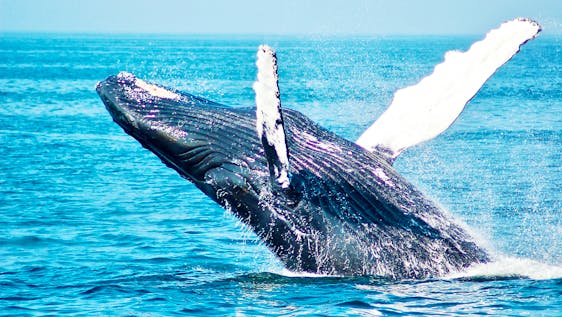
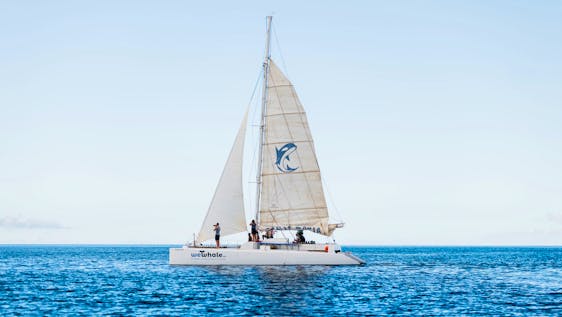
Looking for dolphin research in Tenerife without a diving license or a whale monitoring program in the Canaries with clear methods? Our boat-based work blends line transects, photo-ID, and behavior codes — ideal for first-timers in Marine Conservation.
Standard methods at sea
- Line transects: Fixed routes at constant speed; defined observer roles and sectors.
- Photo identification: Dorsal fin marks (nicks, pigmentation); numbering and duplicate checks.
- Behavior codes: e.g., foraging, traveling, resting — recorded consistently.
- Environmental data: Beaufort scale, visibility, swell/wind, GPS track, timestamp.
Coast & outreach
- Microplastic transects: standardized samples, size fractions (pellets, fibers, fragments), data upload.
- Seagrass/Posidonia awareness: explain no-anchor zones, simple app-based mapping, visitor stewardship.
- Waste audits: fraction-by-weight (glass/metal/plastic/cigarette butts) → local prevention measures.
Why the data matters
Datasets show pressures from underwater noise, boat traffic, and microplastics and help refine rules and routes.
- Volunteer levers: clean protocols, complete uploads, beachside education.
- KPIs (examples): validated photo-IDs/week, standardized sighting rates, compliance talks per beach access.
Safety & ethics at sea
- Safety: life jacket, sun protection, electrolytes; always follow skipper instructions.
- Ethics: no luring/feeding, keep minimum distances, work only with certified operators.
🐬 Tenerife: Dolphin & whale monitoring — no diving license needed
No diving certification required. Boat work combines line transects, photo-ID, and behavior codes with environmental logs.
- Tasks: log sightings, take photo-ID, record GPS/time, upload & QA data, educate visitors on minimum distances.
- Species (common): Bottlenose & common dolphins, short-finned pilot whales; seasonally sperm & pelagic species.
- Impact (KPIs): validated datasets/week, matched photo-IDs, compliance conversations per trip.
If you search for “dolphin research volunteer Tenerife (no diving required)” or “whale monitoring volunteer Canary Islands”, this is a clear, beginner-friendly setup — data quality over selfies.
🪸 Balearics: Protecting Posidonia seagrass (snorkel-friendly)
Posidonia oceanica stores carbon, stabilizes coasts, and provides nurseries. Volunteers map meadows, protect dunes, and raise awareness.
- Tasks: microplastic transects, visual seagrass mapping, visitor info, beach workshops.
- Indicator species: seahorse reports (anonymized), sea urchin density, algal blooms.
- KPIs: m² mapped seagrass, clean-up kilos by fraction, people reached/workshop.
For Posidonia seagrass protection in Mallorca, this format fits perfectly: near-shore snorkel mapping, dune care, and microplastics — the exact combo often searched as “seagrass conservation volunteer Mallorca”.
🐴 Equine welfare in Andalusia — numbers over show
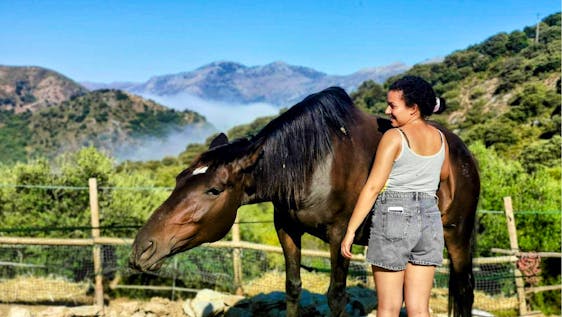
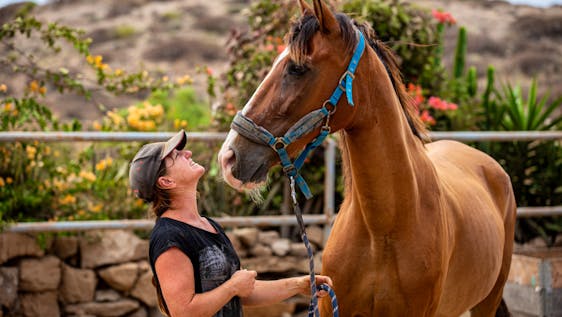
This setup targets searches like “equine welfare volunteer Spain” or “rescue horses volunteer Málaga”: rehab over riding, documented progress (BCS trend), clear biosecurity.
In Andalusia, animal wellbeing is the priority. Routine, patience, and clean documentation drive rehabilitation.
Concrete tasks
- Care & feeding: rations, water/hay checks, paddocks/stalls, health checklists.
- Enrichment & groundwork: halter work, low-stimulus desensitization, gentle equipment handling.
- Sanctuary ops: hay storage, tool care, minor repairs, visitor education on welfare standards.
Rehab standards & biosecurity
- Intake/triage: Body Condition Score (BCS), parasite/wound check, careful re-feeding (reduce colic risk).
- LIMA principle: least intrusive, minimally aversive — watch stress signals, progress stepwise.
- Biosecurity: zone-clean tools, honor quarantine, shoe/hand hygiene.
Making wellbeing measurable
- BCS trend: weekly trajectory; aim for ranges, not one-off values.
- Hoof/dental intervals: keep appointments, yard log, photo before/after.
- Stress indicators: reduced stereotypies (weaving/cribbing), normalized resting HR and feeding times.
- Enrichment logs: frequency/duration and behavioral responses (e.g., more exploration).
Emergencies & communication
- First steps: colic/lameness checklist, call vet/team ASAP, no self-medication.
- Visitor messaging: why “no riding” protects horses: energy budget, joints, stress.
Role profile & entry: Horse rescue in Andalusia
🐴 Andalusian sanctuaries: day plan & fit
- Morning: feeding, water/hay, paddocks/stalls, health checks.
- Midday: enrichment/groundwork, hoof/dental appointments, documentation & gear care.
- Afternoon: logistics, small repairs, visitor info.
Best fit: calm handling, team spirit, heat tolerance; not a riding-oriented program.
📚 Education & youth work — outcomes over hours
Strong education projects track learning progress, secure materials, and respect safeguarding.
How to measure learning
- Pre/post checks: 5–7 minutes (vocabulary, pronunciation).
- Weekly goals: e.g., “10 minutes of free speaking” or “5 key phrases used accurately”.
- Material repository: reusable games/exercises, micro-guides, versioning.
Didactics & inclusion
- CEFR alignment: A1/A2 → chunks & visuals; B1 → role-plays; B2 → debates/projects.
- Differentiation: choice stations (read/listen/speak), visual timers, exit tickets.
- Safeguarding: two-adult rule, no private accounts, clear photo policy.
- Parent engagement: monthly note with 3 mini-exercises (dialogue, audio, word hunt).
Roles beyond the classroom
- Library: simple cataloging, repair, lending system.
- After-school: sports, theatre, reading circles — prioritize speaking over grammar-heavy drills.
Further reading: Teach English in Spain
📚 Barcelona: Teach English without TEFL — week plan
For searches like “teach English volunteer Barcelona no TEFL” or “education volunteer Spain conversational English” — with measurable A2–B1 outcomes.
- Mon–Tue: pre-checks, dialogue cards, partner talks (10-minute conversations).
- Wed: project work (poster/audio story), feedback, leveled tasks.
- Thu: real-life tasks (directions, doctor, shopping), mini-presentations.
- Fri: post-checks, reflection, handover notes (material repository).
KPIs: goals achieved, minutes of free speaking, reusable materials produced.
Language add-on: In Bilbao, Spanish courses are often available (great for educational leave).
🐶 Animal shelters & street animals — adoption over overcrowding
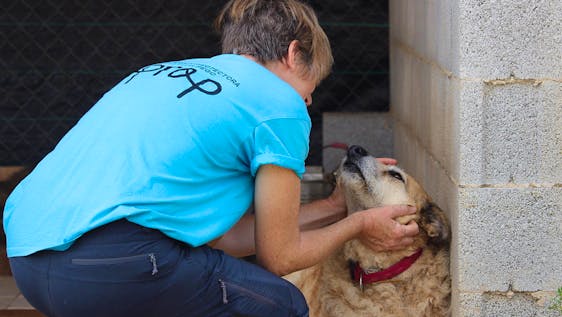
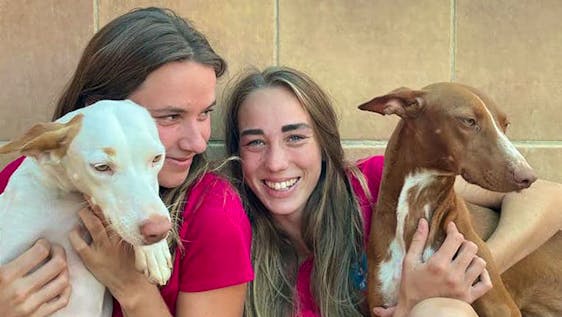
Perfect if you search “animal shelter volunteer Spain Barcelona” or “dog rescue volunteer Spain”: daily care, socialization, profile photos & adoption copy — not just feeding and cleaning.
- Tasks: feeding, exercise, kennel cleaning, socialization (lead work, basic cues), photos/bios for adoption, info booths.
- Ethics: no forced contact, respect stress signals, follow quarantine.
- KPIs: adoptions/month, updated profiles/week, training minutes per animal.
🥗 Food rescue & soup kitchens — circularity over waste
Whether “food bank volunteer Barcelona” or “soup kitchen volunteer Madrid”, you’ll work on cold-chain logs, allergen labeling, and tracking kilos rescued.
- Tasks: pickup/sorting, log cold chain, plan menus, service; maintain data (kilos by fraction).
- Safety: hygiene protocols, allergen flags, onboarding for new helpers.
- KPIs: kg rescued/week, portions/shift, satisfaction feedback.
🎨 Arts & movement education — expression & resilience
- Tasks: art studios (painting/collage), theatre/music workshops, sports & coordination, small performances.
- Didactics: low-barrier starts, ritualized openings/closings, clear safeguarding rules.
- KPIs: participants/class, finished projects (e.g., exhibit), self-assessment before/after.
🏔️ Beach & mountain clean-ups — data over bags
- Tasks: plan routes, weigh fractions, map hotspots, report to municipality/partners.
- Safety: gloves, grabbers, sun protection; do not handle hazardous items (follow reporting chain).
- KPIs: kg by fraction/event, hotspots mapped, reduced re-littering.
🪸 Valencia/Albufera — lagoon, dunes, schools
Great for city–nature work: bird counts (herons, spoonbills, flamingos), water level/clarity checks (turbidity), secure dunes, remove invasives, run school workshops.
- Methods: point counts at set times, simple turbidity checks, photo logs of dune erosion.
- KPIs: count points/week, meters of dunes secured, participants/workshop, waste fractions/clean-up.
🌾 Valencia/Albufera: weekend volunteering
Ideal for “weekend volunteering Spain” and “beach cleanup volunteer Valencia”: 48–72 hours of microplastic counts, dune fencing, and short school sessions with data upload.
- Sat morning: clean-up & fraction weighing · afternoon: dune fencing & signage.
- Sun: school/community mini-workshop (30–45 min), upload data & submit a brief report.
- Great fit: Flexible Volunteering
🌲 North (Galicia/Asturias) — forest, trails & coast
If you search “forest restoration volunteer Galicia” or “trail maintenance volunteer Spain”, this is hands-on: nurseries, planting, drainage, and coastal clean-ups with clear KPIs.
- Forest & soil: species by elevation/moisture, mulching, small water channels (swales), remove eucalyptus/black locust.
- Monitoring: planting lists with coordinates/date, survival checks, simple GIS notes.
- KPIs: survival at 30/90 days, meters of drainage improved, geotagged erosion reports.
🎁 Five benefits of volunteering in Spain
- Deeper cultural understanding: genuine contact with communities & languages.
- Stronger networks: collaborate with NGOs & experts in marine, education, and animal welfare.
- Soft-skill growth: teamwork, comms, problem-solving in the field.
- Better Spanish: everyday and project vocabulary in real situations.
- Sustainable impact: measurable results, not one-off actions.
💵 Cost of living in Spain
Estimate for international volunteers (excluding flights/program fees): 42–105 USD/day — higher in big cities, lower in rural areas. Accommodation is often included or discounted.
For “volunteer in Spain with accommodation provided”: many programs include volunteer houses or host families — details vary by project profile.


💰 Example costs by project type (estimates)
| Project type | Cost/day | Notes |
|---|---|---|
| Marine conservation (boat/coast) | 45–85 USD | boat/safety costs, data equipment |
| Equine welfare/sanctuary | 35–70 USD | feed/hay, vet visits, rural location |
| Education/community | 30–60 USD | urban, sometimes meals included |
| Animal shelters | 30–55 USD | core care, materials, training |
➕ Additional costs to plan for
- Program fees (support, materials, sometimes accommodation/meals)
- Travel (international & domestic)
- Insurance (travel & health, medical evacuation)
- Possible certificates (medical notes, background checks)
- Personal expenses (SIM, transit, excursions, snacks)
📅 Season & best time to go
| Region | Best time | Notes |
|---|---|---|
| Canary Islands | Year-round | Mild temps; trade winds & sea state matter |
| Balearics | Spring–autumn | seagrass/dune care most active; very hot midsummer |
| Valencia/Albufera | Spring/autumn | lagoon & bird monitoring, school workshops |
| Andalusia (inland) | Spring/autumn | summer heat; sanctuary work early/late in the day |
| Barcelona/Bilbao | Year-round | wetter in the north; busy beaches in summer |
🛂 Visa, law & ethics
- EU/EFTA citizens: no visa for volunteer stays; ID/passport is enough.
- Non-EU: check rules early (passport validity ≥ 6 months, onward travel, insurance proof).
- Ethics & protection: no wildlife selfies, keep marine mammal distances, don’t publish sensitive nest/hotspot GPS.
- Safeguarding: two-adult rule, transparent comms, documented consent.
🧭 Safety, health & culture
- General safety: pickpockets in big cities; keep valuables on you, use official taxis/apps, never leave drinks unattended.
- On the road: driving can feel hectic; drive rested, plan secure parking.
- Health: sun/heat, safe water, electrolytes; on islands, mind swell/sea state.
- Culture: lunch often after 2 pm, dinner after 9 pm; many shops close for siesta (~2–5 pm) — plan ahead.
- FAQ intent: queries like “is Spain safe for volunteers” or “volunteer visa Spain for non-EU citizens” — see the FAQ below.
🎒 Packing by region
| Zone | Must-have | Nice-to-have |
|---|---|---|
| Coast/Islands | sun protection, cap, reusable bottle | rashguard, dry bag |
| Boat/Sea | wind/rain shell, non-slip shoes | sea-sickness remedy |
| Inland/Andalusia | work clothes, gloves, sturdy shoes | headlamp, electrolytes |
| Cities/Schools | material folder, notebook, pens | lamination sleeves for games |
- Docs & basics: ID/passport, insurance proof, background check if needed, keep copies/scans, locker padlock, small first-aid kit.
🗓️ A typical volunteer day in Spain
Morning: briefing, core tasks (boat/sanctuary/classroom) · Midday: team/host family · Afternoon: community/workshops · Evening: documentation, gear care.
⏱️ Short-term formats (2–3 weeks & weekends)
- Coast/beach: clean-ups, microplastic transects, short workshops
- Andalusia: sanctuary routines, enrichment, logistics
- Valencia/Albufera: dune fencing, bird counts, school sessions
Tip: plan 1–2 buffer days (travel, weather, sea state).
🧩 How to apply
- Choose a program: check tasks, ethics, season, minimum duration.
- Contact the organization via Volunteer World: confirm availability, accommodation, briefing, insurance.
- Documents & travel: ID/passport, background/health checks if needed, insurance; plan arrival & onboarding.
🕵️♀️ Who can join?
- Minimum age: usually 18 (some 16+ with consent).
- Language: basic English; Spanish is very helpful (local courses often available).
- Health/safety: documents as required; readiness for teamwork & protocols.
Common concerns like “volunteer in Spain without speaking Spanish” or “over 50s volunteering Spain” aren’t blockers: many English-speaking teams and age-friendly roles (data logging, library, materials).