





















Whale Conservation Volunteer
 Activities
 Shark Conservation
 Hotspots
 Waste Reduction
 Dolphin Conservation
 Humpback Whale
 Diving
 Ocean Cleaning
 Environment
 Marine Conservation
 Plastic Reduction
 Sea Turtle Conservation
 Ray Conservation
 Bottlenose Dolphin
 Snorkeling
 Coral Reef
 Manta Ray
 Leatherback Turtle
 Premium
 Vegan
Vegan
 Oceania
 Grey Reef Shark
 Australia
 Queensland
 Australia and New Zealand
 Cairns
 Whitetip Reef Shark
 Dwarf Sperm Whale
 Hammerhead Shark
 Great Barrier Reef
 Animal
 Marine Life
 Europe
 Southern Europe
Blue Whale
Southern Europe
Blue Whale
 Common Dolphin
 Spain
Spain
 Diving certificate
 Africa
 Tenerife
 Southern Africa
 South Africa
 Southern Right Whale
 Great White Shark
 Penguin Conservation
African Penguin
Humpback Dolphin
Brydes Whale
Penguin Conservation
African Penguin
Humpback Dolphin
Brydes Whale
 Mako Shark
 Beach Cleaning
Fin Whale
Atlantic Spotted Dolphin
Beach Cleaning
Fin Whale
Atlantic Spotted Dolphin
 Green Sea Turtle
 Hawksbill Turtle
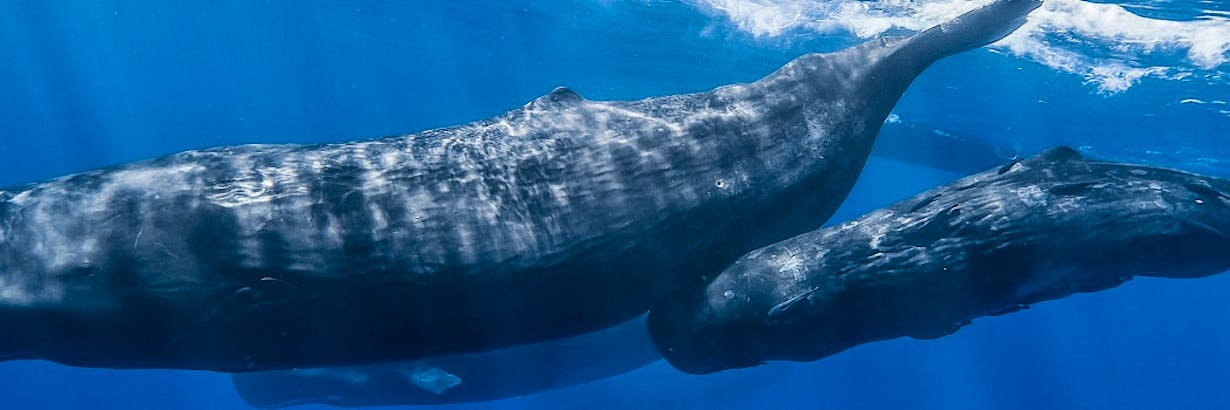
 Sperm Whale
 Greece
 Orca
Orca
 PADI Divemaster
 Lanzarote
 Loggerhead Turtle
Striped Dolphin
Rissos Dolphin
Loggerhead Turtle
Striped Dolphin
Rissos Dolphin
 Pilot Whales
 Raja Ampat
Eagle Ray
Epaulette Shark
Raja Ampat
Eagle Ray
Epaulette Shark
 South East Asia
Devil Ray
South East Asia
Devil Ray
 Asia
Asia
 Indonesia
 Americas
 Azores
Sei Whale
Azores
Sei Whale
 Portugal
False Killer Whale
Spinner Dolphin
Portugal
False Killer Whale
Spinner Dolphin
 Mozambique
 Eastern Africa
 Whale Shark
 Leopard Shark
 Yoga
Yoga
 Central America
 Costa Rica
 Olive Ridley Turtle
 Ecuador
 Spanish Courses
 South America
 Language Course
 Surfing
Long-beaked Common Dolphin
Surfing
Long-beaked Common Dolphin
 Conservation Work
Cuviers Beaked Whale
Conservation Work
Cuviers Beaked Whale
 Italy
Italy
 Plettenberg Bay
 Blacktip Reef Shark
 Safari
 Dugong
Manatee Conservation
Short-beaked Common Dolphin
Dugong
Manatee Conservation
Short-beaked Common Dolphin
 Wildlife Conservation
 Oaxaca
 Port Elizabeth
 Mexico

















-(1024x678).jpg?auto=format&crop=faces&fit=crop&h=317&w=562)
.jpg?auto=format&fit=crop&h=60&w=60)

Volunteer Projects and Internships with Whales
Dawn over the open sea, the distant hush of waves, low fog slowly pierced by the sun. Then a gentle blow — a whale breaks the surface before sliding back into the blue. Whale conservation projects abroad blend conservation, science, and adventure: you’ll get to know the ocean’s largest residents, track their migrations, collect meaningful data, and help safeguard threatened species. Orcas in Norway, humpbacks in Mozambique, or pilot whales off Tenerife — everywhere, authentic encounters and real impact await, with field routines that balance learning, safety, and ocean respect.
🔬 Quality & Safety in Whale Conservation
- Experience: Volunteers support boat- and land-based teams with observing, logging, and reporting. You’ll learn real field methods — it’s hands-on, not just a boat ride.
- Expertise: Projects follow established scientific protocols (photo-ID, PAM, behavioral coding) under guidance from marine biologists and seasoned skippers.
- Authoritativeness: All projects are linked to protected areas or research partners (local NGOs, national parks, Whale Heritage Sites) and share vetted data where appropriate.
- Trust: Clear approach distances, safety briefings, photo/data privacy, ethics policies, and emergency procedures keep people and wildlife safe throughout the season.
⚡ TL;DR – Whale Conservation Programs at a Glance
- What you’ll do: Photo-ID, basic acoustics (PAM), boat/shore transects, behavior logging, citizen science & community education.
- Why it matters: Understand migration & behavior, inform protection measures, reduce bycatch, and engage local communities.
- Duration & budget: 2–3 weeks (intro), 4–12 weeks (field tracks), typically €250–1,200 per week depending on region, season & inclusions.
- Where: South Africa, Dominican Republic, Spain, Portugal, Norway, Iceland, Costa Rica, Ecuador, Australia, New Zealand, Mozambique, Hawaii, Argentina.
- Species: Humpbacks, orcas, pilot whales, sperm whales, dolphins, blue whales, minke whales and more — depending on season and sea state.
📡 Field Methods in Whale Conservation
- Photo-ID: Capture individual fluke/dorsal patterns for re-sightings and population estimates; standardized angles and filenames make your images usable.
- PAM (Passive Acoustic Monitoring): Hydrophones for clicks and songs, especially with orcas/sperm whales; simple tagging protocols keep data consistent across teams.
- Behavioral observation: Log surface activity, mother-calf behavior, migration cues, boat interactions; short, frequent entries beat long narratives.
- Coastal & boat transects: Repeated lines give comparable effort; wind and swell dictate timing, so early mornings are common.
- Citizen science: Data feed public catalogs (e.g., Happywhale, Sea Watch UK) and are cross-checked with local sightings to add context.
🌊 Migration & Season Calendar — where whales are when
| Region | Key species | Main season | Typical method | Min distance / rules | Good for |
|---|---|---|---|---|---|
| Mozambique | Humpbacks | Jun – Oct | Coastal transects, photo-ID | Speed limits | First-timers |
| Spain (Canary Islands) | Pilot whales, dolphins | Year-round | Boat transects, acoustics | 100 m | First-timers |
| Portugal (Azores) | Sperm, fin whales | Apr – Sep | PAM + photo-ID | Ethics code | Intermediate |
| Dominican Republic | Humpbacks | Jan – Mar | Behavioral logging | Strict rules | All levels |
| South Africa | Southern right, humpbacks | Jun – Nov | Coastal transects | No-chase | All levels |
| Norway | Orcas, humpbacks | Oct – Jan | Boat transects, photo-ID | Ethics | All levels |
| Iceland | Minke, humpbacks, blue | May – Sep | Boat & acoustics | 100 m | Intermediate |
| Costa Rica | Humpbacks (N + S) | Dec – Mar & Jul – Oct | Coastal transects | Regulated | First-timers |
| Ecuador / Galápagos | Sperm, dolphins, orcas | Jun – Nov | PAM + photo-ID | National park | Intermediate |
| Australia | Humpbacks, dolphins | Jun – Nov | Boat transects | Ethics | Intermediate |
| New Zealand | Humpbacks, southern right | Jun – Nov | Transects + acoustics | Rules | All levels |
| Hawaii | Humpbacks | Jan – Apr | Citizen science | Distance rules | First-timers |
| Argentina (Patagonia) | Southern right, orcas | Jul – Dec | Land observation | Park rules | All levels |
Regional notes (quietly useful): In Mozambique, calm early mornings often suit shore scans before short boat runs; heat builds after noon. The Canaries offer leeward routes with 1–3 h outings — great for steady data even in trade winds. On the Azores, land lookouts (vigias) guide RIBs to offshore encounters; layers are handy as weather switches fast. The Dominican Republic work centers on the Silver Bank sanctuary where mother-calf etiquette is paramount. In South Africa, Hermanus and nearby bays allow reliable land effort when swell keeps boats docked. Norway brings short winter daylight and crisp air; thermal layers and waterproofs make field time comfortable. Iceland mixes fjords and open bays; swell windows reward quick deployment. Costa Rica spans both hemispheres’ humpbacks with warm rain showers — quick covers protect notebooks. Galápagos/Ecuador require park permits and briefings; biosecurity is strict but logistics are smooth in-season. Australia has east- and west-coast flows; trips are longer but seas often gentler at dawn. New Zealand leverages canyon upwellings (e.g., Kaikōura) — expect rich multi-species logs. Hawaiʻi leeward channels near Maui are calm, with frequent mother-calf observations. Patagonia (Peninsula Valdés area) favors land watches with steady photo-ID opportunities from cliffs.
🛡️ Ethics & Conduct Around Whales
- Minimum approach distance: at least 100 m
- Slow approach, never cut an animal’s path
- Cease observation at stress signals (course change, rapid dives)
- No swimming, feeding, or touching
- Treat sensitive location data as confidential and share on a need-to-know basis
🧯 Safety & Risk Matrix
| Risk | Trigger | Mitigation | Stop rule |
|---|---|---|---|
| Rough seas | Beaufort > 4 | Reschedule or switch to land effort | No boat ops |
| Heat/dehydration | T > 30 °C | Shade, water, electrolytes | Pause/stop |
| Seasickness | Early symptoms | Horizon fix, medication | Return/stop |
| Gear failure | Sensor/camera down | Swap to backup | Pause PAM |
🐋 Species & Tracks — who travels where
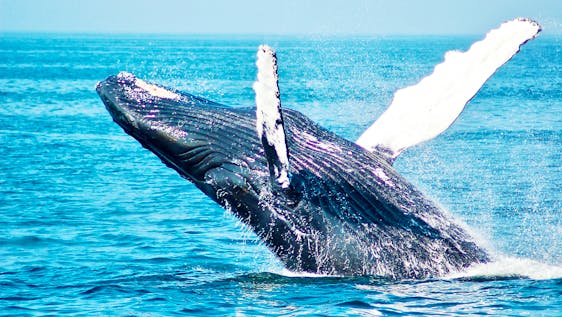
🐋 Humpback Whale
The classic “singer”. Humpbacks migrate thousands of kilometers between feeding and calving grounds and are ideal for learning photo-ID and behavior logging. Short, repeatable transects build patterns over days; when visibility drops, land points still deliver solid fluke shots after breaches or tail-ups.
🦈 Orca (Killer Whale)
Highly intelligent hunters with strong social structure. Winter hotspot: Norway. Focus on photo-ID, acoustics, foraging events on herring, and boat-response notes; cold hands? Fingerless liners under gloves keep cameras steady.
🐬 Pilot Whale
Year-round in the Canaries. Coastal groups allow frequent sightings and short, weather-tolerant runs — perfect for newcomers and consistent dorsal-fin cataloging between squalls.
🐳 Sperm Whale
Deep-diving giant with distinctive clicks. Hotspots: Azores & Galápagos. Demanding but invaluable: you’ll time surface intervals and note “fluke-up” cues; hydrophone duty rotates so everyone practices clean acoustic tags.
🐋 Minke & Blue Whales
Off Iceland, minkes and occasional blues appear on clear, calm days. Projects are often advanced with tight data standards; rangefinders and quick angles matter when surfacing windows are short.
🐳 Southern Right Whale
Typical of South Africa, Mozambique and Argentina. Often paired with coastal protection and community education; from shore, steady head-callosity shots support accurate re-sightings.
🐋 Species & Tracks — what you’ll meet where (with volunteer tasks)
Quick species briefs with hotspots, seasonal windows, and the tasks where volunteers add real value. These are guidelines — each project will brief you on local rules, boat etiquette, and how to adapt when wind or swell picks up.
🐋 Humpback Whale
Markers: Large dark fluke with pale underside, unique patterns; very long pectorals; frequent breaches/tail slaps.
- Hotspots & season: Mozambique (Jun–Oct), Costa Rica (Dec–Mar & Jul–Oct — both hemispheres), Dominican Republic (Jan–Mar), Australia (Jun–Nov), Hawaii (Jan–Apr).
- Behavior: Commutes between cold feeding and warm calving waters; males sing; curious at times, but we keep our line and speed steady.
- Volunteer tasks: Fluke photo-ID, behavior logs (breach, slap, mother-calf), coastal transects, school workshops on ocean noise & bycatch.
- Methods: Standard boat lines & land points, photo-ID, basic acoustics (songs), GIS entries with consistent timestamps.
- Ethics: Never approach mother-calf pairs; engine in neutral if close, ≥ 100 m, never cross a whale’s path.
🦈 Orca (Killer Whale)
Markers: Black-white pattern, tall dorsal (very tall in males), saddle patch for ID.
- Hotspots & season: Norway (Oct–Jan; herring), sometimes Iceland (late spring/summer), rarely Ecuador / Galápagos (Jun–Nov, opportunistic).
- Behavior: Social, coordinated foraging; pods with learned techniques like bait-balling herring.
- Volunteer tasks: Dorsal/saddle photo-ID, acoustic logging (clicks/whistles), note foraging events (at distance), fisher chats on bycatch/co-existence.
- Methods: PAM, boat transects, standard behavior codes, secure catalog uploads after daily QC.
- Ethics: No chase; keep parallel tracks, minimize engine noise, adjust immediately if animals change course.
🐬 Pilot Whale
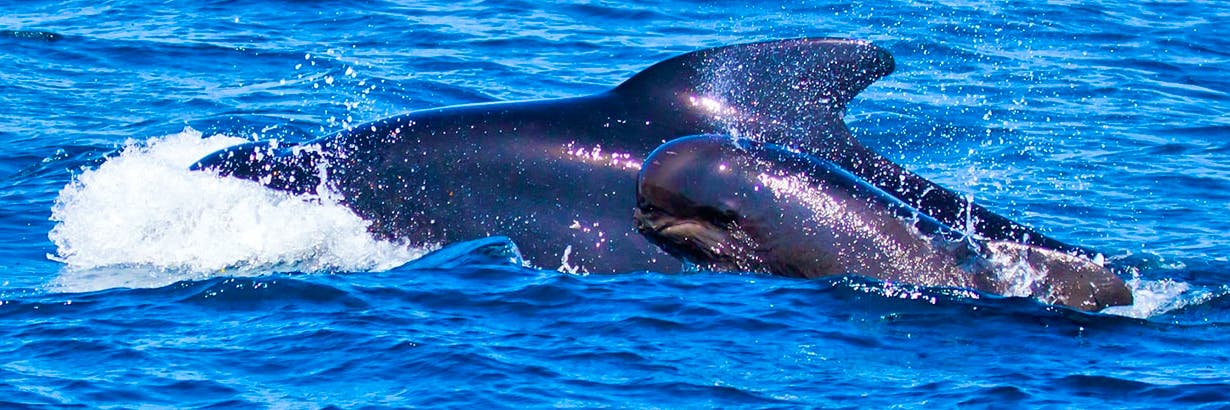
Markers: Dark body, rounded “melon”, sickle dorsal; stable groups, site-faithful.
- Hotspots & season: Spain — Canaries (year-round, esp. Tenerife/La Gomera); sometimes Portugal Madeira (year-round).
- Behavior: Long surface phases, deeper dives; strong cohesion allows social-structure notes within short outings.
- Volunteer tasks: Dorsal-fin notch photo-ID, group size/composition logs, boat-ethics monitoring, community education.
- Methods: Boat transects, land station (binocular/rangefinder), standardized angle/distance estimates using quick sketches.
- Ethics: Limit encounter duration, maintain parallel course, respect resting groups.
🐳 Sperm Whale
Markers: Huge square head, blow angled forward/left, fluke with deep notches; extreme dives (>1,000 m).
- Hotspots & season: Portugal — Azores (Apr–Sep), Ecuador / Galápagos (Jun–Nov), sometimes New Zealand (Jun–Nov).
- Behavior: Deep diver (giant squid), long surface recoveries; acoustic cues announce approach before the blow.
- Volunteer tasks: Click-series tags, fluke photo-ID, surface/dive interval logs, map deep-dive zones for effort planning.
- Methods: Hydrophone PAM, photo-ID, standardized time/depth estimates via surface intervals; buddy-checks prevent missed timestamps.
- Ethics: Never disturb deep-dive prep; approach only from side/parallel, maintain strict distance.
💙 Blue & Fin Whale
Markers: Blue: massive, bluish-gray marbling, tiny dorsal bump; Fin: sleek, asymmetric head pattern (pale lower right jaw).
- Hotspots & season: Iceland (May–Sep; blue & fin), sometimes Portugal — Azores (spring), Southern Ocean passages (research teams).
- Behavior: Oceanic and mobile; short surfacing windows demand quick, quiet positioning.
- Volunteer tasks: Distance estimates, course/speed logs, dorsal/flank photo-ID, shipping-traffic notes to flag strike risk areas.
- Methods: Calm-sea transects, laser photogrammetry where permitted, AIS overlays during evening data sessions.
- Ethics: Keep very large distances; no forced course changes; minimize sound.
⚪ Minke Whale
Markers: Smaller baleen whale, pointed head, pale “arm-band” on flipper (Atlantic), quick direction changes.
- Hotspots & season: Iceland (May–Sep), Norway (summer/late summer).
- Behavior: Skittish; short, unpredictable surfacing; often solitary or in small groups.
- Volunteer tasks: Rapid sighting logs (bearing, time, distance), clean photo-ID, precise weather/visibility notes.
- Methods: High-scan from bow/beam, tight timestamps, transects with disciplined station roles.
- Ethics: No active approach; passive observation — the whale sets the distance.
⚫ Southern Right Whale
Markers: No dorsal fin, robust body, pale head callosities — perfect for photo-ID from shore with long lenses.
- Hotspots & season: South Africa (Jun–Nov), Argentina — Patagonia (Jul–Dec).
- Behavior: Coastal and bay-oriented calving areas; long surface times make land effort productive even on windy days.
- Volunteer tasks: Land-based scans, callosity photo-ID, mother-calf monitoring, boater-etiquette outreach.
- Methods: Shore transects, drone photogrammetry where permitted, GIS mapping of calving bays for seasonal buffers.
- Ethics: Strict protection of nursery areas; drones only in-project and authorized.
🟣 Bryde’s & Sei Whale
Markers: Bryde’s: three head ridges; Sei: very sleek, dark dorsal, pelagic.
- Hotspots & season: Ecuador / E. Atlantic drift routes (Bryde’s), N. Atlantic margins/Iceland (Sei; summer).
- Behavior: Subtle, short surface windows; feed along fronts and upwelling lines where birds signal forage fish.
- Volunteer tasks: Edge-data collection: time surfacing precisely, note water parameters (T/salinity), map forage indicators (birds, bait balls).
- Methods: Transects across thermal fronts, binocular scans, parallel seabird counts to enrich context.
- Ethics: No pursuit; when ID is uncertain, record conservatively — data quality beats “rarity”.
🤝 Community & Education — local impact
- Fisher Talks: Reduce bycatch via training and hotspot mapping; swap practical tips on gear and release.
- School Labs: Sessions on whale ecology, ocean noise & plastics with simple take-home actions.
- Local training: Build skills for local skippers & guides so economic value stays in the region.
- Youth tracks: Supported programs for under-18s focused on observation, safety, and stewardship.
🌍 Citizen Science — keep contributing from home
After the project, you can keep helping: tag sightings, match photos, validate entries, or help compile short briefs — all remotely. Many partners connect with Happywhale, Sea Watch UK, or WhaleMap.
- Database matching: link fluke photos to catalogs
- Review & tag sighting records for QC
- Share classroom materials and amplify outreach
🎒 Prep & packing list
- Basics: Wind/rain jacket, warm hat or sun cap, sun/cold protection, non-slip shoes, refillable bottle.
- Field gear: Binoculars if possible, camera with telephoto (70–200 mm+), spare batteries, dry bags, notebook, lens cloths.
- Digital: Offline maps, local eSIM, upload rules, consistent file naming (Date_Site_Species).
📈 Measuring impact — clear & transparent
- Outputs (weekly): Sightings, usable photo-ID images, acoustic minutes, education hours, coastal transects.
- Outcomes (quarterly): Individual re-sightings, confirmed migration paths, bycatch hotspots, shifts in boater behavior.
- Quality & learning: Brief daily debriefs, “stop-the-line” culture, data reviews, small process fixes (checklists, naming standards).
❓ FAQ – Whale conservation projects abroad
How can I contribute as a volunteer?
You’ll help with photo-ID, coastal transects, boat observations, citizen science, and community education. You gather data, observe behavior, support outreach, and directly aid the protection of threatened species.
Which species might I see?
It depends on location and season. Commonly: humpbacks, orcas, pilot whales, sperm whales, dolphins, minke, blue whales, and southern right whales. Norway is known for orcas, the Canaries for pilot whales, and Costa Rica for humpbacks.
What are the best destinations?
Top choices include Norway, Iceland, Mozambique, Spain, Costa Rica, Dominican Republic and Australia — clear rules, solid sighting chances, and structured teams.
When is the best time to go?
By region: Mozambique: June–October (humpbacks) • Costa Rica: December–March & July–October • Norway: October–January (orcas) • Azores: April–September (sperm whales). Many projects align with peak migrations to maximize productive effort days.
Do I need dive experience?
No. Most tasks are land- or boat-based — photo-ID, behavior logging, citizen science. Diving appears only in a few specialized programs and isn’t required.
How does the photo-ID training work?
In 1–2 days you’ll learn to photograph flukes/dorsals correctly, record clean metadata, and upload to catalogs. Photo-ID underpins population monitoring and migration analysis.
Which locations are beginner-friendly?
Spain, Norway, Costa Rica and Dominican Republic — short outings, steady sightings, structured briefings.
How are sensitive whale sites protected?
Coordinates of calving or hotspot areas aren’t made public. Projects apply minimum distances (≥ 100 m), ethics guidelines, and protected datasets to safeguard vulnerable populations.
Can I keep helping after I return?
Yes. Through Happywhale, Sea Watch UK or WhaleMap you can tag photos, log sightings, or classify data from home.
How long is a typical placement?
Most programs run 2–12 weeks. Many start with 2–4 weeks; longer stays pick up key monitoring tasks and data QA roles.
What background do I need?
Intro programs need no special skills — motivation and teamwork are enough. For advanced roles (e.g., PAM, data analysis), basics in biology, environmental science, or IT help.
How can I fund my stay?
Volunteers often use grants, educational leave, or scholarships. Some projects discount longer stays or students. Early planning secures the best rates and flight options.